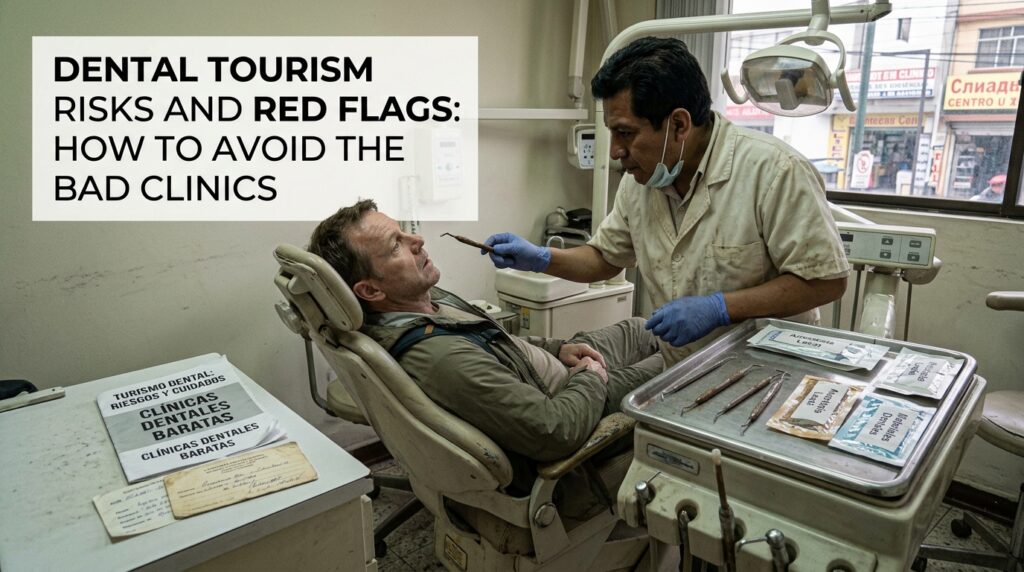
A perfect low price can hide a costly mistake. Every year, thousands of patients discover too late that the wrong choice in dental tourism costs more than money — it costs bone, time and trust. Understanding dental tourism risks is not about fear; it is about knowing exactly which signals separate a safe, accredited clinic from a dangerous one, before you pay a deposit or book a flight.
At Clínica Dentária Santa Catarina in Porto — 56 years on the same street, ISO/TC 106 certified and built around Swiss Straumann implants — we see the aftermath when choosing the best dental clinic in Portugal is done on price alone. This guide maps the real dental tourism risks, the 7 red flags that reveal a bad clinic in minutes, and a 7-criteria comparison table you can use to audit any quote — including ours — so you avoid the bad clinics entirely.
1. What Dental Tourism Risks Really Look Like in 2026
Dental tourism risks are not hypothetical. Common second-opinion failures are predictable: implants placed without CBCT, non-sterile chain breaks, cheap non-CE components, early overload and prosthetics without a titanium bar — each saving a clinic hundreds but costing patients thousands in retreatment.
- Volume over continuity: High-ad-spend clinics rotate freelance surgeons who never see you at recall. If your case fails at 8 months, the surgeon is gone, and the “guarantee” is a voucher for the same clinic you no longer trust.
- Quote without scan: Some agencies quote All-on-4 at €3,900 without ever reviewing your CBCT. That price assumes no extraction difficulty, no grafting and no complication — an assumption that collapses chairside, where “necessary addition” fees appear. Legitimate dental tourism risks include this bait-and-switch far more often than surgical risk.
- Component opacity: Non-branded “compatible” implants may look similar on X-ray but lack surface science and connection tolerance. Patients are rarely shown a lot-number certificate. When a component fractures at year 3, replacement parts are unavailable at home.
The real frequency of complications
Well-conducted systematic reviews report implant failure at 1–2% at 5 years in accredited settings, rising to 5–9% when smoking, uncontrolled diabetes or poor hygiene are unmanaged, and peri-implantitis prevalence of 10–20% at 10 years. These are not arguments against treatment — they are arguments for choosing protocols that mitigate dental tourism risks from day one. The CDC Summary of Infection Prevention Practices in Dental Settings details sterilization, hand hygiene and traceability standards that separate safe clinics from risky ones.
Why 2026 demands stricter vetting
In 2026, cross-border volume is at record highs, and AI-generated marketing makes every website look premium. That is why dental tourism risks today are subtle quality erosion more than overt danger — and the flags below make it visible.
2. The 7 Red Flags That Reveal a Bad Dental Tourism Clinic
If you see any one of these, pause. If you see two, walk away. Each flag correlates directly with documented dental tourism risks.
Red Flag #1 — Quote without CBCT or intraoral scan
A fixed price before a scan is a sales price. Safe clinics require a CBCT and show nerve, sinus and bone mapping before committing. A “final” All-on-4 quote from a panorama alone is a core dental tourism risk.
Red Flag #2 — No implant brand, no certificate, no lot number
“Premium implant included” without naming Straumann, Nobel Biocare or Zimmer and without a lot-number card signals non-CE compatibles. Evasive answers equal avoidable dental tourism risks.
Red Flag #3 — No in-house lab, no titanium bar discussion
A definitive bridge without a milled titanium bar will flex and fracture veneer — a classic long-term dental tourism risk when labs are outsourced and “bar” never appears in your plan.
Red Flag #4 — One-visit full mouth with no staged option
Immediate loading has indications, not universality. Seniors, smokers and low-density bone often need staged loading. Promising “teeth in 24 hours for everyone” prioritizes marketing over biology, increasing early failure dental tourism risks.
Red Flag #5 — No surgeon names, no verifiable registration
Who will place your implants? In Portugal, every dentist must be registered with the Ordem dos Médicos Dentistas. If a website hides surgeon names or shows stock photos, you cannot verify qualifications. Search the full name; unlisted equals unlicensed — a severe risk.
Red Flag #6 — No written guarantee with conditions and exclusions
“Lifetime guarantee” without a document that states what is covered (fixture vs prosthesis), for how long, and what voids it is not a guarantee. Good clinics give you a signed page with torque values, references and recall obligations. Vague promises are among the most expensive risks when you need a revision at home.
Red Flag #7 — Pressure deposit and no video consult
“Pay €1,000 today to lock this price, offer ends Friday” is coercion, not care. Ethical clinics offer a video consult with the actual surgeon, a written plan and time to decide. They also follow principles like the GDC’s standards on obtaining valid consent, which require patients to be told the treatment cost, the guarantee terms and any exclusions before treatment starts — and they never rush payment.
3. Good vs Bad Clinic: The 7-Criteria Comparison Table Every Patient Needs
Use this table as an audit sheet. Score any clinic you consider for dental tourism risks — 0 for bad, 1 for good. A safe clinic scores 7/7. Anything below 5/7 warrants a second opinion.
| Criterion (7) | ✅ Good Clinic (Safe) | ❌ Bad Clinic (Risky) |
|---|---|---|
| 1. Diagnosis | CBCT + intraoral scan required before final price | Quote from panorama; CBCT “optional” |
| 2. Implant system | Named CE system (Straumann) with lot-number certificate | “Premium” unnamed, no certificate |
| 3. Lab & prosthesis | In-house lab, titanium bar included for full-arch | Outsourced cheapest lab, resin without bar |
| 4. Surgical plan | Guided surgery, torque ≥35 Ncm for load, staged when indicated | Freehand for all, “teeth in 24h for everyone” |
| 5. Surgeon transparency | Named surgeon, verifiable, speaks your language | Anonymous team, stock photos |
| 6. Guarantee | Written, itemized, conditions clear | Vague “lifetime” verbally |
| 7. Care pathway | Video with surgeon, fixed price, 12-month follow-up | Price pressure, no video, no follow-up |
Santa Catarina scores 7/7 on this audit for dental tourism risks and invites you to verify each line: ask for a Straumann certificate sample, tour the in-house lab on video, and request a previous anonymized guarantee letter before you decide. Transparency is the antidote.
How to use the table in a real quote review
Copy the table into an email and ask the clinic to fill the “Good” column with your case specifics. If they leave blanks or answer “we use several brands depending on stock,” that is a failed audit. For a neutral perspective on why registration verification matters, see FDI’s global report on illegal dental practice, which defines it as care delivered by providers without proper registration or licensing.
4. How Top Clinics Neutralise Dental Tourism Risks: Protocols That Protect You
Eliminating these risks is procedural, not theatrical. Here is how a top-tier clinic like Santa Catarina operationalizes safety.
- CBCT-first, price-second: Your CBCT is reviewed in a video call that maps bone, sinus, nerve and periodontal status. The plan states All-on-4 vs All-on-6, grafting and loading. Fee is fixed after that call, not before.
- Guided surgery with torque logging: Guides reduce flap size and swelling. Only implants ≥35 Ncm receive immediate provisional loading — threshold discipline halves early overload risks.
- Titanium bar + passive fit: Full-arch definitives are built on a milled titanium bar. The bar is tried in alone before veneering to verify passive fit.
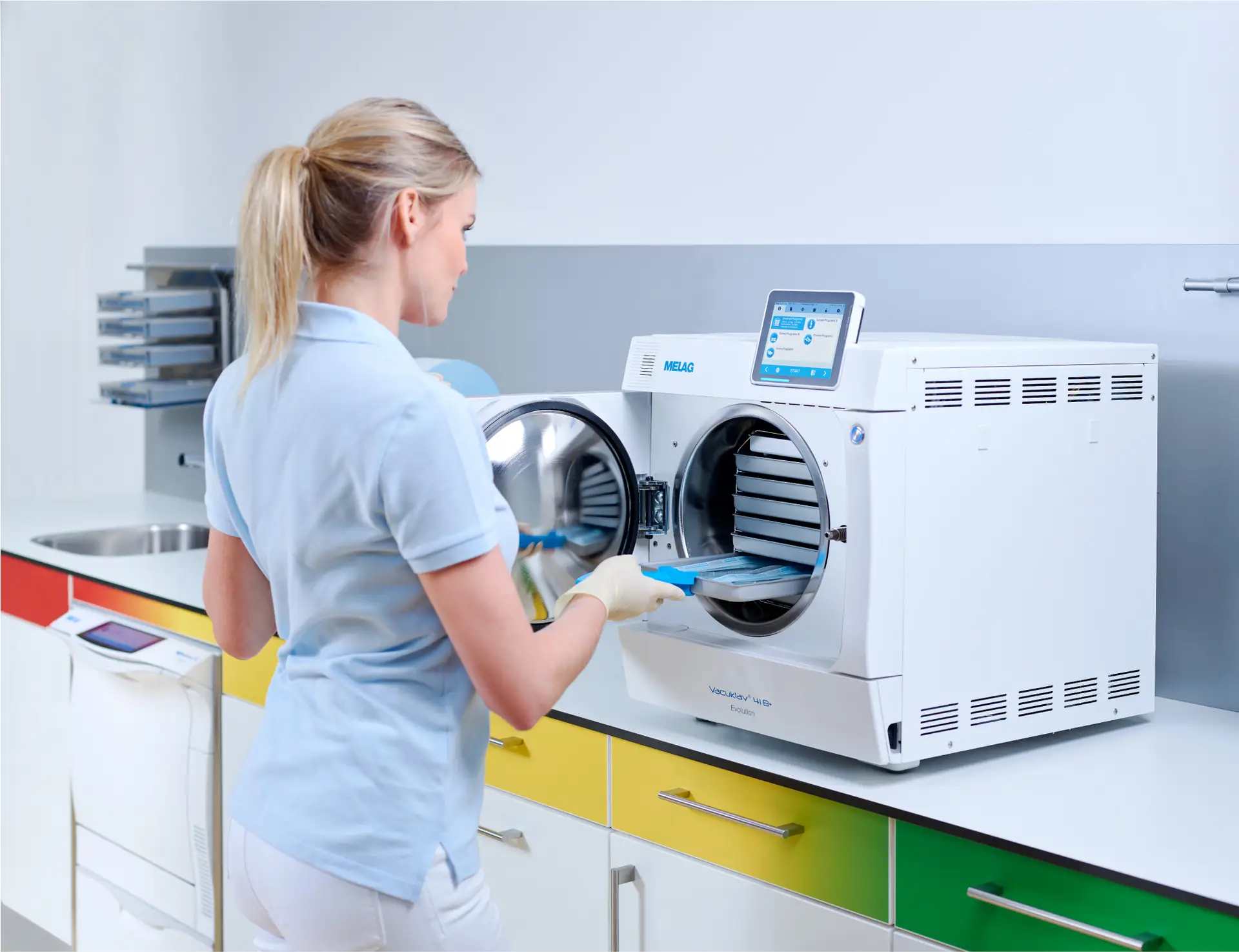
- Sterile chain you can audit: Biological indicators, pouch logs and scan-before-open shown to you. You leave with references, torque values and panoramic.
Continuity over volume
The same surgeon who plans your case places it and reviews your 6-week photo. The same coordinator answers WhatsApp at month 4. That continuity reduces handoff errors — a major driver of failures in high-turnover centers. Learn how this contrasts with generic offers on our dental implant and All-on-4 in Portugal pages.
Aftercare that survives the flight home
Good aftercare is scheduled: day 2 suture check, week 2 photo, week 6 video, month 4 assessment and annual recall. The highest-risk window is weeks 2–8; checks catch mucositis before peri-implantitis.
5. Your Pre-Booking Safety Checklist: 7 Checks Before You Pay a Deposit
Before you pay, run this 7-check audit. It takes 30 minutes; if a clinic fails any check, request clarification in writing.
- 1. OMD/ERS verification: Search surgeon’s full name on OMD and confirm ERS licensing. Save screenshots.
- 2. Brand certificate sample: Ask for photo of recent Straumann/Nobel certificate with lot number. No sample = no system.
- 3. Lab evidence: Request 30-second lab video showing milling or bar try-in.
- 4. Written plan with staging logic: Insist plan states immediate vs staged loading and torque threshold.
- 5. Itemized guarantee: Demand sample letter covering fixture and prosthesis separately.
- 6. Price that includes the “if”s: Confirm grafting, extractions and provisional included if CBCT indicates them; get written non-increase guarantee.
- 7. Video with the surgeon: Speak to the operator, not only coordinator. A surgeon who lists contraindications is safer than one who promises everything.
Deposit discipline
Reputable clinics take a modest refundable deposit (€200–€350) after the video consult, not a €1,000+ lock. Surgical fees are due on treatment day after CBCT review and consent.
Document pack you should receive
Before you fly, you should hold: signed plan + fixed price, consent in your language, surgeon name/registration, implant system and lot-number promise, lab note, and follow-up schedule. Cross-check expectations with trusted sources like the CDC infection control summary before traveling.
6. What Happens If It Goes Wrong? Complications, Guarantees and Legal Recourse
Even in excellent hands, biology can surprise. Honest clinics normalize this: not “will a complication happen?” but “how will it be handled?”
Early vs late complications
- Early (0–8 weeks): swelling, provisional loosening, suture discomfort — managed remotely then reviewed in Porto.
- Biological (2–12 months): failed osseointegration (1–2%) or mucositis — fixture removed, grafted if needed, replaced under guarantee with staged timing.
- Prosthetic (6 months – 5 years): chip, screw loosening, wear — titanium-bar bridges chip far less; screws retorqued at 15–25 Ncm.
Guarantee that actually helps
A useful guarantee separates fixture (lifetime) from prosthesis (5-year, conditional on recall), states who pays travel for revisions and includes references and torque values — so any dentist can understand your case. Vague verbal promises exemplify the costliest risks.
Legal recourse without borders
Within the EU, the EU Patient Rights Directive 2011/24/EU establishes that patients receiving care in another EU state are entitled to clear information, records and follow-up documentation. Portugal adds ERS licensing and OMD oversight. Keep your implant passport, invoices and CBCT as your cross-border record. Avoiding failures starts with choosing a jurisdiction where recourse is codified.

7. FAQ: Dental Tourism Risks and Red Flags Answered
Are dental tourism risks higher than having implants at home?
Not inherently — risk correlates with clinic quality, not country. An ISO-certified clinic with guided surgery and CE Straumann in Porto is often safer than a low-cost domestic clinic that skips CBCT. A 7/7 score abroad beats 3/7 at home.
What is the biggest dental tourism red flag I can spot in 5 minutes?
A quote that names no implant brand and offers a final price without your CBCT. That single evasiveness predicts component opacity and bait-and-switch graft fees — the costliest risks. Ask for brand and certificate sample; if none, you have your answer.
How do I verify a Portuguese dentist is legit?
Search the full name on the OMD finder and confirm ERS licence. If a site shows first names only or stock photos, treat it as hard risk and do not book.
Is “teeth in 24 hours for everyone” safe?
Sometimes. Immediate loading is safe at ≥35 Ncm with adequate bone and controlled parafunction. For smokers, bruxism or low-density bone, staged loading is safer. Clinics promising 24-hour teeth for every case increase early failure risk.
What guarantee should I insist on to cover dental tourism risks?
A written letter — in your language — separating fixture (lifetime) from prosthesis (5-year, conditional on recall), listing references, torque values and travel responsibility. Verbal “lifetime” without it is one of the most expensive risks when you need help at home.
Conclusion: audit, then act. The best defense against dental tourism risks is a 30-minute audit before you pay: verify registration, demand brand and certificate, confirm bar and guided surgery, require staged logic in writing, and speak to the surgeon on video. Clinics that welcome that scrutiny — as we do at Santa Catarina — are the clinics that remain accountable long after you fly home. When you are ready, send your panoramic X-ray via WhatsApp +33 7 44 03 40 82 or the online estimate form and receive a fixed, CBCT-validated plan within 24 hours — scored 7/7 on the table above.