1. Why is Portugal Becoming a Popular Destination for British dental Patients?

For many people living in the United Kingdom, maintaining good oral health has become an increasingly expensive undertaking. While British dentistry offers access to highly qualified professionals and advanced treatment options, the cost of private dental procedures can be a major obstacle, particularly for patients who need several implants, extensive restorative work or a complete reconstruction of their teeth. As a result, an increasing number of British residents are considering treatment abroad, with Portugal emerging as an attractive destination.
The decision to seek dental care outside the United Kingdom is rarely based on a single reason. For some patients, the main motivation is financial: they need treatment that would otherwise cost thousands of pounds in Britain. Others have discovered that their NHS dental coverage does not include the implant treatment they require, while their private dental insurance provides limited reimbursement or excludes certain procedures altogether. There are also patients who have postponed dental treatment for years because of the expense and are now actively looking for an alternative.
Portugal offers a combination of competitive private dental prices, modern dental facilities, qualified professionals and convenient international connections. Major cities such as Porto and Lisbon have developed private healthcare sectors that welcome international patients. Our dental practice has experience treating visitors from the United Kingdom and provide English-speaking assistance, making the experience easier for people who are unfamiliar with the Portuguese healthcare system.
The interest in dental treatment in Portugal is particularly noticeable among patients considering implant dentistry. Dental implants are a long-term solution for replacing missing teeth, but the overall cost can be substantial when several implants are needed. Patients who require All-on-4, All-on-6 or full-mouth rehabilitation may face private treatment bills of several thousand or even tens of thousands of pounds in the UK.
By comparison, Portuguese clinics like our clinic in Porto may offer more affordable treatment packages, depending on the implant system, the materials selected, the number of procedures and the complexity of the patient’s dental condition. The financial difference can be particularly relevant for people who need treatment on both the upper and lower jaws.
However, choosing Portugal should not be viewed as simply buying cheaper dentistry abroad. Patients must consider professional qualifications, clinical standards, the suitability of the proposed treatment, implant traceability, aftercare and the possibility of additional visits. A low initial quotation does not necessarily represent the best value if important elements are excluded.
There are also practical considerations. Travelling for dental treatment requires planning, particularly when surgery is involved. Patients need to understand how long they should remain in Portugal, when they can safely return to the UK and whether they will need another visit after the healing period.
This guide examines the ten main factors explaining why British patients are increasingly interested in Portuguese dentistry. It compares private dental prices, explains NHS coverage and UK dental insurance, discusses treatment quality and explores the practical advantages of dental tourism.
The objective is to help British patients make an informed decision about whether Portugal could be a suitable destination for their dental needs.
2. The High Cost of Private Dental Implants in the United Kingdom
One of the most significant reasons British patients consider travelling to Portugal is the cost of private implant treatment in the UK.
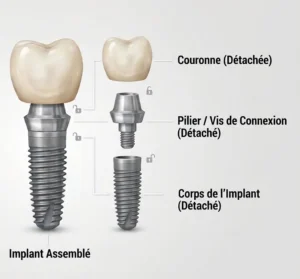
Dental implants are among the more expensive restorative dental procedures because they involve several clinical and technical stages. Treatment generally requires an initial assessment, diagnostic imaging, surgical placement of the implant, a healing period, the fitting of an abutment and the final restoration.
An implant is usually a small titanium fixture placed in the jawbone to replace the root of a missing tooth. Once it has integrated with the surrounding bone, a dental crown can be attached to restore the appearance and function of the missing tooth.
Although a single implant may be relatively straightforward in suitable cases, treatment becomes more complex when patients have several missing teeth, insufficient bone volume or advanced gum disease.
In the UK, private dental implant prices vary according to geographical location, the dentist’s experience, the implant manufacturer, the laboratory, the type of crown and the complexity of the procedure.
As a concrete example, Bupa Dental Care advertises dental implants starting from £2,400 at selected practices. Its published starting price includes a single implant, an abutment and a screw-retained porcelain crown. The provider also explains that the final price depends on the patient’s individual requirements.
Patients can consult the official pricing information here:
External resource: Bupa Dental Care – How much do dental implants cost?
This is an important reference because it illustrates the cost of a complete implant restoration rather than simply the price of the implant fixture.
Why can dental implant treatment become so expensive?
Several additional procedures can increase the total cost.
Bone grafting: Patients who have lost bone volume following tooth extraction or long-term tooth loss may require bone augmentation before implant placement.
Sinus lift: In some cases involving the upper posterior jaw, a sinus lift may be necessary to create sufficient bone volume for implant placement.
Tooth extractions: Teeth that cannot be preserved may need to be removed before or during implant treatment.
Temporary teeth: Depending on the treatment protocol, patients may require temporary crowns or a temporary fixed prosthesis during healing.
Advanced imaging: Three-dimensional imaging, such as CBCT, may be needed to assess bone anatomy and plan surgery.
Laboratory work: The manufacture of custom-made crowns and bridges is another important component of the final cost.
These expenses become particularly significant when several teeth need replacing.
Comparing UK and Portuguese dental implant prices
Portugal is attractive because some private dental providers advertise lower prices than comparable British providers. However, it is essential to distinguish between an implant fixture, an implant with an abutment and a complete restoration with a crown.
For example, Clínica Médica São João publishes an illustrative price of €850 for one implant with a ceramic crown. Its published table also includes examples of multi-implant prosthetic treatments. The clinic specifies that the figures are illustrative and that an assessment is required before treatment decisions are made.
External resource: Clínica Médica São João – Dental Implants and Prices
The following table provides a useful starting point for comparison.
| Treatment | United Kingdom | Portugal |
|---|---|---|
| Single implant with restoration | From approximately £2,400 at Bupa | From approximately €850 at a provider advertising this package |
| Implant fixture only | Depends on provider | Depends on provider |
| Abutment | Included in some packages | May be included or separate |
| Ceramic or porcelain crown | Depends on quotation | Depends on quotation |
| Bone grafting | Additional when required | Additional when required |
| Sinus lift | Additional when required | Additional when required |
| CBCT scan | Depends on practice | Depends on clinic |
These examples are not a national average or a guarantee of equivalent treatment. The UK price is Bupa’s published starting price, while the Portuguese price is an advertised example from a particular provider.
Why the difference matters for patients requiring multiple implants
Consider a patient who needs six individual dental implants.
If the British starting price is £2,400 per complete implant restoration, six implants would represent £14,400 before any additional procedures.
A Portuguese clinic may offer a lower total for a comparable treatment, although the final amount depends on the patient’s clinical condition and the package’s exact contents.
For patients requiring complete rehabilitation, the potential difference can be even more important.
A patient who needs to replace most or all of their teeth may be offered an All-on-4 or All-on-6 solution rather than an individual implant for every missing tooth. These treatments use a limited number of strategically positioned implants to support a fixed dental bridge.
In Britain, full-arch implant treatment can represent a substantial private financial commitment. Portuguese providers may offer more accessible alternatives.
This is why searches for Dental Implants Cost UK are closely related to searches for affordable dental treatment abroad.
Ultimately, patients should compare complete treatment plans, not advertising headlines. A detailed quotation should identify the implant brand, the number of implants, the prosthetic material, temporary teeth, final teeth, diagnostic examinations, surgical procedures and aftercare.
3. NHS Dental Coverage: Why British Patients Often Have to Pay Privately for Implants
The National Health Service is an essential part of the British healthcare system. Nevertheless, patients sometimes misunderstand what NHS dentistry covers, particularly when they need advanced restorative procedures.
NHS dental services in England are organised around three principal treatment bands. These cover clinically necessary dental care, from examinations and diagnostic procedures to fillings, extractions, crowns, bridges and dentures.
However, dental implants are not routinely included in NHS treatment.
According to the official NHS guidance, implants are usually available privately and are only occasionally provided through the NHS in exceptional clinical circumstances.
Examples may include certain patients who have lost teeth following serious accidents or cancer treatment, or individuals who cannot wear conventional dentures for particular medical reasons.
Official NHS information:
External resource: NHS – Dental treatments and dental implants
This distinction is important because many patients assume that if a treatment is medically necessary, the NHS will automatically fund it. In reality, treatment availability depends on clinical eligibility, commissioning policies and the patient’s individual circumstances.
How much does NHS dental treatment cost in England?
As of 1 April 2026, the published NHS dental charges in England are:
| NHS treatment band | Charge from April 2026 | What it covers |
|---|---|---|
| Band 1 | £27.90 | Examination, diagnosis, X-rays when necessary and preventive care |
| Band 2 | £76.60 | Band 1 care plus fillings, root canal treatment and extractions |
| Band 3 | £332.10 | Band 1 and 2 care plus crowns, bridges and dentures |
Source: NHS Business Services Authority – Current NHS treatment costs
These charges apply to eligible NHS treatment in England. Patients who qualify for exemptions may receive free treatment or financial assistance.
It is important to understand that the NHS bands are not private dental price lists. They represent patient contributions for eligible NHS treatment.
What happens when a patient needs dental implants?
Imagine someone who has lost several teeth due to advanced periodontal disease.
The dentist may assess the patient’s condition and recommend different treatment options. Depending on the clinical circumstances, NHS treatment may include dentures or bridges where appropriate.
However, if the patient specifically wants fixed teeth supported by dental implants, they will generally need to consider private treatment.
This creates a difficult situation for people who cannot afford British private dentistry but do not want to rely exclusively on removable dentures.
Some therefore begin researching international dental providers, just like those patients coming to our clinic.
Portugal becomes an option because patients can request a private quotation, compare prices and explore different implant rehabilitation solutions.
Does the NHS reimburse planned dental treatment in Portugal?
The answer requires an important distinction.
The NHS does have arrangements for certain types of planned treatment abroad, including the S2 funding route and the EU Directive route. Eligibility is subject to strict conditions, prior authorisation where required and the rules governing the relevant treatment.
However, these arrangements should not be interpreted as automatic reimbursement for any private dental procedure undertaken in Portugal.
For example, the S2 route requires the treatment to meet the relevant funding criteria and to be provided through an eligible state-funded healthcare provider. It is not simply a way of obtaining reimbursement for a privately arranged dental implant package.
Patients should consult the official information before relying on any funding arrangement:
External resource: NHS – Going abroad for medical treatment
External resource: NHS – Planned treatment abroad through the S2 route
For most British patients choosing a private Portuguese dental clinic, the treatment should be budgeted as a private expense unless written confirmation of funding has been obtained.
What about Scotland, Wales and Northern Ireland?
The UK does not operate one identical dental charging system across all four nations.
Scotland, Wales and Northern Ireland have different arrangements concerning NHS dental services and patient contributions.
Patients should consult their respective national health services to understand their eligibility and the available treatment options.
Nevertheless, the general issue remains relevant throughout the UK: private implant treatment may be necessary when the patient does not meet the criteria for publicly funded implant care.
This is one of the reasons why Portuguese private dentistry attracts attention from patients living across England, Scotland, Wales and Northern Ireland.
4. UK Dental Insurance Coverage: Does British Dental Insurance Pay for dental treatment in Portugal?
Private dental insurance is another important factor influencing patients’ decisions.
Many British residents have some form of dental insurance through an employer, an individual policy or a healthcare plan. However, having insurance does not necessarily mean that extensive implant treatment will be covered.
The level of reimbursement depends on the policy, the insurer, the treatment category, the annual allowance and the conditions attached to the contract.
Some policies primarily cover routine treatment, including examinations, hygiene appointments, fillings and emergency dental care.
Other policies offer benefits for more advanced procedures such as crowns, bridges and dentures.
Dental implants, however, may be excluded, subject to a specific limit or available only under particular conditions.
What does UK dental insurance usually cover?
The following table provides a general overview of common insurance features.
| Type of treatment | Typical insurance position |
|---|---|
| Dental examinations | Often covered |
| Routine hygiene | Often covered |
| Fillings | Frequently covered up to policy limits |
| Extractions | Frequently covered |
| Root canal treatment | May be covered |
| Crowns | May be partially reimbursed |
| Bridges | Depends on the policy |
| Dental implants | Often excluded or restricted |
| Cosmetic dentistry | Frequently excluded |
| Treatment abroad | Depends on the insurer |
These are general characteristics, not a description of every UK policy.
Why do some policies exclude dental implants?
Dental implants are expensive and may involve several stages of treatment.
An insurer may therefore impose restrictions to manage the cost of claims.
For example, a policy may reimburse only a percentage of eligible treatment expenses, subject to an annual maximum.
If a patient has an annual dental allowance of £500, this may provide limited assistance when the complete implant treatment costs several thousand pounds.
Some policies also impose waiting periods. Others exclude pre-existing dental conditions or treatment that was recommended before the insurance policy began.
Patients should therefore avoid assuming that their insurance will cover an implant procedure simply because they have a dental insurance card.
Can British patients use their dental insurance in Portugal?
Potentially, but the answer depends on the policy.
Some international health insurance products may include eligible dental treatment abroad. Certain cash plans may also reimburse qualifying dental expenses, subject to their contractual conditions.
However, many standard UK dental insurance products have geographical restrictions or approved-provider requirements.
Before arranging treatment in Portugal, patients should contact their insurer and request written clarification.
They should ask:
- Are dental implants included in my policy?
- Can I receive treatment in Portugal?
- Is the clinic required to be part of an approved network?
- Is prior authorisation necessary?
- Are pre-existing conditions excluded?
- Does the policy cover the implant fixture, abutment and final crown?
- Is reimbursement based on the actual amount paid or a fixed UK tariff?
- What is the annual maximum reimbursement?
- What documents must I submit after treatment?
- Is a translation of the clinical report required?
Written confirmation is particularly important for patients planning extensive treatment such as All-on-4, All-on-6 or complete mouth rehabilitation.
What if the insurance company does not cover the treatment?
This is where comparing the total private treatment cost becomes important.
Even if a policy does not reimburse treatment in Portugal, the patient may find that the overall cost is still lower than obtaining equivalent private treatment in the UK.
For example, someone who needs several implants may discover that a Portuguese quotation, including flights and accommodation, remains financially attractive.
However, the patient should include the possibility of additional visits, unexpected procedures and long-term maintenance when calculating the total expense.
The best approach is to consider insurance as a potential additional benefit, not as a guaranteed source of funding.
5. Why Portugal Is an Attractive Destination for Dental Implants and Full-Mouth Rehabilitation
Portugal has become an interesting option for international dental patients because it combines competitive private dentistry with a developed tourism infrastructure.
The country has a significant private healthcare sector, and major cities offer dental practices providing general dentistry, restorative procedures, implantology, prosthodontics and cosmetic treatments.
For British patients, this creates an opportunity to compare different providers and obtain personalised treatment proposals.
Competitive prices without automatically sacrificing quality
The price difference between private dentistry in the UK and Portugal is one of the most visible reasons for the country’s popularity.
However, patients should understand that Portugal does not have one national private dental tariff.
Every private clinic sets its own prices according to its operating costs, location, professionals, materials and treatment methods.
Some clinics publish individual prices for implants, while others provide complete packages.
For example, Clínica Médica São João advertises an illustrative package of €850 for one implant with a ceramic crown. Another Portuguese healthcare provider, CUF, publishes separate prices for implant surgery and implant-supported crowns in its price documentation.
These examples illustrate why patients should compare the precise services included in each quotation.
Useful external resources:
Why are All-on-4 and All-on-6 treatments particularly attractive?
Many British patients who investigate dental tourism are not looking to replace just one missing tooth.
Some have lost most of their teeth and are struggling with conventional dentures. Others have severe dental deterioration and need a comprehensive rehabilitation.
For these patients, full-arch implant solutions may be considered.
All-on-4 generally uses four strategically positioned implants to support a fixed prosthesis across one dental arch.
All-on-6 uses six implants to support a fixed prosthesis.
The decision between the two techniques depends on several clinical factors, including bone volume, jaw anatomy, the patient’s medical history and the design of the final restoration.
A greater number of implants is not automatically better. The most appropriate approach is the one that offers a suitable biomechanical and biological solution for the individual patient.
Comparing full-arch implant treatment
| Criteria | All-on-4 | All-on-6 |
|---|---|---|
| Number of implants per arch | 4 | 6 |
| Purpose | Support a fixed full-arch prosthesis | Support a fixed full-arch prosthesis |
| Bone requirements | Depends on anatomy and implant positioning | Depends on anatomy and implant positioning |
| Surgical planning | Essential | Essential |
| Temporary teeth | May be possible in selected cases | May be possible in selected cases |
| Final restoration | Fixed full-arch prosthesis | Fixed full-arch prosthesis |
| Suitability | Determined by the implantologist | Determined by the implantologist |
The price of complete rehabilitation depends on whether the quotation includes extractions, temporary teeth, the definitive prosthesis, implant components, laboratory work and any additional surgical procedures.
Patients should also clarify the material used for the prosthesis.
For example, acrylic, metal-acrylic, zirconia and other restorative materials have different properties and costs.
A treatment quotation should explain which material is being proposed and why it is appropriate for the patient’s situation.
Why Portugal appeals to patients needing extensive treatment
The financial commitment associated with full-mouth reconstruction can be overwhelming.
A patient who needs treatment on both jaws may be looking at a total private treatment cost that exceeds their available savings.
Portugal offers another opportunity to obtain a clinical assessment and compare the cost of comprehensive treatment.
This does not mean that every patient will be suitable for immediate implant placement or a fixed temporary prosthesis.
Some patients may need periodontal treatment, extractions, bone grafting or other preliminary procedures before implant surgery.
The important advantage is the ability to explore different treatment options and receive a detailed quotation before deciding whether to travel.
6. Dental Technology, Implant Brands and Professional Qualifications in Portugal
Price is important, but patients also want to know whether the dental treatment they receive in Portugal will meet appropriate clinical standards.
A lower price is not useful if the proposed treatment is unsuitable or if the clinic cannot provide adequate follow-up care.
British patients should therefore investigate the clinic’s professional qualifications, equipment, surgical experience and treatment protocols.
Modern diagnostic equipment
Many private dental clinics in Portugal use modern diagnostic technologies.
Depending on the provider, these may include:
- Panoramic dental radiography.
- Cone-beam computed tomography (CBCT).
- Digital intraoral scanners.
- Computer-assisted implant planning.
- Guided implant surgery.
- CAD/CAM prosthetic manufacturing.
- Digital smile and prosthetic design.
These technologies can contribute to more accurate diagnostic information and better treatment planning.
CBCT imaging is particularly useful in implantology because it allows the clinician to assess three-dimensional bone anatomy and the position of important structures.
This may help determine the appropriate implant dimensions and positioning.
Digital intraoral scanning can also improve the process of designing crowns and bridges by producing digital impressions of the patient’s mouth.
However, technology should never replace clinical judgement.
The most advanced scanner cannot compensate for an inadequate diagnosis or an unsuitable treatment plan.
The importance of choosing a qualified implantologist
In Portugal, dental professionals must comply with the relevant professional registration requirements.
The Ordem dos Médicos Dentistas (OMD), the Portuguese Order of Dentists, provides a public search service that allows patients to verify the registration of dental practitioners.
This is a useful resource for British patients who want to check the professional status of a dentist before travelling.
External resource: Ordem dos Médicos Dentistas – Search for Dentists
Patients should also ask about the dentist’s experience with the particular procedure being proposed.
For example, a clinician who regularly performs single-tooth implant placements may not necessarily have the same experience with complex full-arch reconstructions.
It is reasonable to ask about:
- Professional qualifications.
- Registration details.
- Experience in implantology.
- Experience with All-on-4 and All-on-6.
- Surgical planning procedures.
- The implant systems used.
- Management of complications.
- Long-term prosthetic maintenance.
Are the implant brands used in Portugal internationally recognised?
Many Portuguese dental practices use internationally established implant manufacturers.
Depending on the clinic and treatment plan, patients may encounter brands such as Straumann, Neodent, Anthogyr and other implant systems.
These manufacturers have different product ranges and technical characteristics.
Patients should not choose an implant solely because of its brand name. The suitability of the system depends on the patient’s anatomy, clinical needs, prosthetic requirements and the dentist’s treatment strategy.
The quotation should identify the implant manufacturer and, where possible, the precise model.
Patients should also receive documentation identifying the implant components placed in their mouth.
This information is important if they require maintenance, replacement components or professional assessment in the United Kingdom.
Hygiene, sterilisation and clinical safety
Infection prevention is another essential aspect of dental care.
Before accepting a treatment proposal, patients should feel comfortable asking the clinic about its sterilisation procedures, surgical protocols and infection-control arrangements.
A responsible provider should be able to explain how instruments are cleaned and sterilised, how surgical areas are prepared and how post-operative instructions are managed.
Patients should also be informed about the risks of the proposed procedure.
Implant surgery can involve complications such as infection, bleeding, nerve injury, sinus complications, failure of osseointegration and peri-implant disease.
These risks vary according to the patient and the procedure.
A proper assessment should include medical history, medication, smoking habits, periodontal condition and other relevant factors.
What makes a good Portuguese dental clinic?
A good clinic should offer more than attractive prices and modern equipment.
It should provide:
- A qualified and registered dental team.
- A comprehensive clinical examination.
- A personalised treatment plan.
- Transparent and itemised pricing.
- Appropriate diagnostic imaging.
- Clear information about implant materials.
- Written post-operative instructions.
- Access to clinical records.
- A structured follow-up process.
- Clear communication in a language the patient understands.
Patients should remember that the quality of treatment is determined by the entire clinical process, not simply the country where the procedure takes place.
7. Porto and Lisbon: Two Convenient Destinations for British Dental Tourism
Another important reason for choosing Portugal is its accessibility from the United Kingdom.
Portugal is a relatively short-haul European destination, and its main cities have international airports with connections to several British cities.
This makes it easier for patients to organise one or more visits for dental treatment.
Porto and Lisbon are particularly relevant destinations for international dental patients.
Both cities have private dental practices, accommodation options, restaurants and transport networks.
Porto: A practical destination for dental patients
Porto is one of Portugal’s most attractive cities and an increasingly interesting destination for international healthcare visitors.
The city combines a historic atmosphere with modern infrastructure.
Porto’s international airport provides connections to the United Kingdom, depending on the airline and season.
The city centre offers hotels, apartments and other accommodation options at different price levels.
Patients attending a clinic in central Porto may find it convenient to stay close to the dental practice, particularly when several appointments are required.
Porto is also relatively easy to explore.
The historic centre, Ribeira district, traditional architecture and riverside areas offer visitors the opportunity to enjoy the city during periods when their treatment schedule allows.
However, patients undergoing implant surgery should prioritise recovery and follow their dentist’s recommendations rather than treating the visit as a conventional holiday.
Lisbon: Another established option
Lisbon is Portugal’s capital and has a large private healthcare sector.
The city offers a wide range of dental practices, international transport connections and accommodation.
Its public transport network includes metro services, buses, trains and trams.
For British patients, Lisbon may be a convenient option depending on their departure airport and the location of the selected clinic.
As with Porto, the most important consideration is the suitability of the clinic and its treatment proposal.
Comparing Porto and Lisbon
| Criteria | Porto | Lisbon |
|---|---|---|
| International airport | Francisco Sá Carneiro Airport | Humberto Delgado Airport |
| Flights from the UK | Available on selected routes | Available on selected routes |
| Accommodation | Hotels and apartments | Hotels and apartments |
| Public transport | Metro, buses and trains | Metro, buses, trains and trams |
| Private dental services | Available | Available |
| Tourism | Historic centre and Douro riverfront | Historic districts and cultural attractions |
| Suitable for multiple visits | Yes, depending on travel arrangements | Yes, depending on travel arrangements |
How much should patients budget for travel?
The cost of travelling to Portugal varies considerably.
Flights depend on the departure airport, airline, booking date, baggage requirements and season.
Accommodation costs depend on the location, length of stay and type of accommodation.
Patients should calculate the cost of the complete treatment journey, particularly if two visits are necessary.
A realistic budget should include:
- Return flights.
- Airport transfers.
- Hotel or apartment accommodation.
- Meals.
- Local transport.
- Additional nights if required.
- A second trip for the definitive restoration.
- Any unexpected travel expenses.
A patient should not assume that a dental quotation includes these services unless the clinic explicitly confirms it.
Why accommodation close to the clinic matters
After dental surgery, patients may prefer to avoid long journeys across the city.
Staying near the clinic can make follow-up appointments easier and reduce the practical burden of travelling.
It can also be helpful when patients need assistance from a family member or companion.
For extensive implant procedures, patients should ask the clinic how long they are expected to remain in Portugal before returning home.
The timing of the return flight should be discussed with the treating dentist.
8. Personalised Patient Support: From the First Enquiry to Long-Term Follow-Up
Travelling to another country for dental surgery can be stressful, especially for people who have never received treatment abroad.
British patients may have concerns about communication, treatment planning, payment, accommodation and what happens if a problem occurs after they return home.
This is why patient coordination is an important part of the dental tourism experience.
A well-organised international dental service should guide patients through the different stages of the process and help them understand what to expect.
Step 1: Initial enquiry and assessment
The process often begins with an online enquiry or telephone conversation.
Patients explain their dental concerns, describe their expectations and indicate which treatment they are considering.
They may be asked to provide:
- A recent panoramic dental X-ray.
- Photographs of their teeth and gums.
- A description of their dental history.
- Information about missing or damaged teeth.
- Relevant medical history.
- Their preferred treatment period.
This information can help the dental team determine whether a preliminary assessment is possible.
Step 2: Preliminary treatment proposal
After reviewing the available information, the clinical team may prepare an initial treatment proposal.
This can include the likely number of implants, possible restorative options, estimated costs and the expected number of visits.
However, it is important to explain that a remote assessment is not equivalent to a definitive diagnosis.
Photographs and panoramic radiographs do not always provide enough information to assess bone volume, anatomical structures or all underlying dental conditions.
A CBCT scan and an in-person examination may be required before surgery.
A responsible provider should clearly distinguish between a preliminary estimate and a confirmed treatment plan.
Step 3: Detailed quotation
The patient should receive a clear breakdown of the proposed treatment.
A comprehensive quotation should explain:
- The number of implants.
- The implant manufacturer.
- The type of abutments.
- The proposed crowns or prosthesis.
- The material used for temporary teeth.
- The material used for the final restoration.
- Any required extractions.
- Possible bone grafting.
- Additional diagnostic examinations.
- The estimated treatment schedule.
- The expected number of trips.
- The costs of any additional procedures.
Patients should also ask whether the quotation includes all laboratory costs and whether there are any circumstances in which the price may change.
Step 4: Organising the dental trip
Once the patient has decided to proceed, the next step is to organise the journey.
Depending on the service provided, an international patient coordinator may help with:
- Appointment scheduling.
- Information about flights.
- Accommodation recommendations.
- Airport transfers.
- Clinic directions.
- Translation and communication.
- Preparation instructions.
- Documentation.
This support can be particularly useful for patients who are travelling alone or who are unfamiliar with Portugal.
Step 5: First visit and implant surgery
The first visit usually involves a clinical examination and the necessary diagnostic investigations.
The implantologist reviews the patient’s dental condition and confirms whether the proposed treatment is suitable.
If everything is clinically appropriate, treatment may proceed according to the agreed plan.
This may involve extractions, implant placement, bone augmentation or other procedures.
In selected cases, temporary fixed teeth can be provided shortly after surgery. However, immediate loading is not suitable for every patient.
The decision depends on implant stability, bone quality, the number and position of implants and the patient’s overall clinical condition.
Step 6: Healing and osseointegration
Following implant placement, the patient enters a healing period.
During this time, the implant integrates with the surrounding bone. This biological process is called osseointegration.
It often takes several months, although the precise duration depends on the patient and the treatment protocol.
The patient returns to the United Kingdom and follows the dentist’s instructions.
Good oral hygiene, avoiding excessive pressure on the implants and attending recommended checks are important during this period.
Step 7: Second visit and definitive teeth
Once the implantologist confirms that the implants are sufficiently integrated, the patient may return to Portugal for the next stage.
This can involve impressions or digital scanning, prosthetic adjustments and fitting the definitive crowns or fixed bridge.
The final restoration should be designed to provide appropriate function, comfort, appearance and cleanability.
The patient should receive instructions on how to maintain the restoration and protect the surrounding tissues.
Why follow-up care is essential
Dental implants require long-term maintenance.
Although implants do not develop tooth decay in the same way as natural teeth, the surrounding tissues can develop inflammatory conditions such as peri-implant mucositis and peri-implantitis.
Patients should attend regular professional maintenance appointments and maintain good daily oral hygiene.
They should also understand how to clean under fixed bridges and around implant-supported restorations.
A responsible clinic should provide:
- Written post-operative instructions.
- Implant identification documents.
- Copies of relevant radiographs.
- A treatment report.
- Details of the materials used.
- Information about the warranty, if applicable.
- Contact details for follow-up questions.
These documents are particularly important when the patient lives in another country.
If the patient experiences discomfort, swelling, bleeding, mobility or another concerning symptom after returning to the UK, they should contact the treating clinic and obtain an appropriate local dental assessment when necessary.
9. Dental Tourism Portugal: Financial Benefits, Lifestyle and Important Considerations
The concept of dental tourism involves travelling abroad to receive dental treatment.
For British patients, Portugal offers an interesting combination of potentially lower private dental prices, convenient transport connections and an established tourism infrastructure.
However, it is important to distinguish between a medical journey and a conventional holiday.
The main objective of a dental trip should be receiving appropriate care.
The financial benefits of travelling to Portugal
The possibility of reducing treatment expenses is one of the strongest motivations.
For patients requiring several implants, the difference between British and Portuguese quotations can be substantial.
Even after including travel and accommodation, some patients may find that the overall cost remains lower than comparable private treatment in the UK.
The financial calculation should include all expenses, not just the dental quotation.
For example, a patient requiring two separate visits should calculate the cost of both journeys.
It is also sensible to leave some room in the budget for unexpected clinical needs.
An opportunity for patients who have postponed treatment
Many people delay dental treatment because of financial concerns.
A missing tooth may initially seem manageable, but over time it can affect chewing, speech and confidence.
Other patients have several damaged teeth and become increasingly dependent on removable dentures.
When treatment costs are high, people sometimes postpone seeking professional advice.
Portugal can provide another opportunity for these individuals to explore private treatment options.
An initial assessment may help them understand what is clinically possible and how much treatment could cost.
However, not every patient is automatically suitable for dental implants.
The implantologist must assess the condition of the gums, bone volume, remaining teeth, general health and other relevant factors.
The importance of travelling with realistic expectations
Dental treatment abroad should never be approached as an instant solution.
Implant rehabilitation can involve surgery, healing periods and multiple appointments.
Some procedures require several months between the first and second stages.
Patients should avoid providers who promise guaranteed results without examining their case or who suggest that every patient can receive fixed teeth immediately.
A responsible dental professional should explain the benefits, limitations, alternatives and possible complications of the proposed procedure.
What about the GHIC and EHIC?
British patients sometimes believe that their UK Global Health Insurance Card (GHIC) or European Health Insurance Card (EHIC) will cover planned dental treatment in Portugal.
This is not correct.
The cards provide access to medically necessary state healthcare during a temporary stay, subject to the applicable rules.
They do not cover planned private dental treatment arranged in advance.
The NHS clearly explains this distinction.
External resource: NHS – Going abroad for medical treatment
External resource: NHS – Applying for a GHIC
Patients should also remember that a GHIC does not replace travel insurance and does not cover medical repatriation.
Is travel insurance enough?
Standard travel insurance may cover certain unexpected medical emergencies, but planned dental procedures are often excluded.
Some policies may also exclude complications arising from treatment undertaken specifically during the trip.
Patients should contact their travel insurer and explain their plans before departure.
They should ask whether the policy covers:
- Travel undertaken specifically for dental treatment.
- Unexpected medical emergencies.
- Complications following planned dental surgery.
- Additional accommodation if travel is delayed.
- Emergency dental treatment.
- Medical repatriation.
The answers should be obtained in writing.
The importance of choosing a responsible provider
The financial benefits of dental tourism should never encourage patients to compromise on clinical safety.
Before booking treatment, patients should verify the dentist’s professional registration, obtain a detailed quotation and ask about aftercare.
They should also check how the clinic manages complications and whether the patient can access their clinical records.
A clinic that communicates transparently and explains the limitations of remote assessments is generally a more reassuring choice than one that promises a fixed result before examining the patient.
Why Portugal can be a practical alternative
For patients who have researched their options, Portugal may offer a reasonable balance between affordability, accessibility and private dental services.
The country provides a range of dental treatment options and an established tourism infrastructure.
For British patients who need significant restorative treatment, it can be worthwhile to compare a Portuguese quotation with the available private options at home.
The final decision should be based on the quality and suitability of the clinical proposal, the total cost and the arrangements for long-term care.
10. Frequently Asked Questions: Dental Treatment in Portugal for British Patients
1. Why are British patients choosing Portugal for dental treatment?
British patients consider Portugal because private dental treatment may be less expensive than in the UK. Other reasons include access to implantology, modern diagnostic technologies, a choice of private clinics, international travel connections and English-speaking patient assistance.
2. How much does a dental implant cost in the UK?
The price depends on the dental practice and the type of restoration. Bupa Dental Care advertises dental implants from £2,400 at selected practices, including the implant, abutment and screw-retained porcelain crown. Other private providers may charge different amounts.
3. How much does a dental implant cost in Portugal?
Prices vary according to the clinic and the treatment package. Clínica Médica São João publishes an illustrative price of €850 for one implant with a ceramic crown. Patients should confirm the exact services included and obtain an individual assessment before making a decision.
4. Is dental treatment cheaper in Portugal than in the UK?
It can be. Some Portuguese private clinics advertise significantly lower prices for implant treatment than British providers. However, patients should compare equivalent treatment plans and include travel, accommodation and follow-up costs.
5. Does the NHS pay for dental implants?
Dental implants are generally not available through routine NHS dentistry in England. They may exceptionally be considered for patients with specific clinical needs, including certain cases involving serious trauma or mouth cancer.
6. Can I get dental implants on the NHS if I cannot afford private treatment?
Financial circumstances alone do not automatically qualify someone for NHS-funded implants. Eligibility depends on clinical criteria and the availability of the treatment through the NHS.
Patients should discuss their options with an NHS dentist.
7. What are the current NHS dental charges in England?
From 1 April 2026, the published charges are £27.90 for Band 1, £76.60 for Band 2 and £332.10 for Band 3, subject to applicable exemptions.
These charges do not represent the cost of private implant treatment.
8. Does UK dental insurance cover dental implants in Portugal?
It depends on the individual policy. Some policies may offer limited overseas benefits, while others exclude implants or restrict reimbursement to approved providers.
Patients should obtain written confirmation from their insurer before travelling.
9. Can I use my GHIC for planned dental treatment in Portugal?
No. A GHIC does not cover planned private dental treatment abroad. It is intended for medically necessary state healthcare during a temporary stay, subject to the applicable conditions.
10. Can the NHS reimburse dental treatment received in Portugal?
Certain planned healthcare funding arrangements exist, including the S2 route, but strict eligibility conditions apply. They should not be confused with automatic reimbursement for private dental treatment.
Patients must obtain the appropriate authorisation before relying on such arrangements.
11. Are dental implants in Portugal safe?
Dental implant treatment can be provided by appropriately qualified professionals in Portugal. However, as with treatment in any country, patients should investigate the dentist’s qualifications, clinical experience, equipment, treatment planning and aftercare arrangements.
All implant surgery carries potential risks.
12. How can I verify a Portuguese dentist’s qualifications?
Patients can use the public dentist search service provided by the Ordem dos Médicos Dentistas.
The official directory allows users to check the registration of professionals qualified to practise dentistry in Portugal.
Website: https://www.omd.pt/en/search-for-dentists/
13. Are international implant brands available in Portugal?
Yes. Depending on the clinic, patients may have access to internationally recognised implant manufacturers such as Straumann, Neodent and Anthogyr.
The precise brand and model should be confirmed in the treatment quotation and recorded in the patient’s implant documentation.
14. What is the difference between All-on-4 and All-on-6?
All-on-4 uses four implants to support a fixed full-arch prosthesis, while All-on-6 uses six implants.
The most suitable technique depends on the patient’s bone anatomy, clinical condition, implant positioning and prosthetic requirements.
15. Is All-on-6 better than All-on-4?
Not necessarily. Six implants may provide additional support in certain cases, but the choice depends on the individual patient’s anatomy and treatment requirements.
The implantologist should determine the most appropriate solution following a clinical assessment.
16. Can I receive fixed teeth on the same day as implant surgery?
Some patients may qualify for immediate loading, meaning that temporary fixed teeth can be fitted shortly after implant placement.
However, this depends on implant stability, bone quality and several other clinical factors. It cannot be guaranteed before an assessment.
17. How many trips to Portugal are needed for dental implants?
Many conventional implant treatments require two visits.
The first visit generally involves assessment and implant placement. The patient then returns home during the healing period before travelling back for the definitive restoration.
Some cases require additional visits.
18. How long does dental implant healing take?
Osseointegration commonly takes approximately three to six months, although the exact period varies.
Bone grafting, individual healing and other clinical factors may extend the treatment schedule.
19. Can I fly home immediately after dental implant surgery?
Patients should discuss their travel arrangements with the treating dentist. The appropriate time to fly depends on the surgical procedure, recovery and any individual medical considerations.
It is important not to book a return flight without considering the dentist’s recommendations.
20. What happens if I experience complications after returning to the UK?
Patients should contact the Portuguese clinic promptly and explain their symptoms.
Depending on the problem, they may also need an examination by a local UK dentist.
This is why patients should obtain copies of their clinical records, implant details and post-operative instructions before returning home.
21. Is Porto a good city for dental tourism?
Porto is an attractive option because it has an international airport, a range of accommodation options, a developed transport network and private dental practices.
The city is particularly convenient for patients whose clinic is located in or near the centre.
22. Is Lisbon better than Porto for dental treatment?
Neither city is automatically better. Both offer private dental services and international transport connections.
Patients should choose the clinic based on professional qualifications, clinical experience, treatment suitability, communication and aftercare rather than the city alone.
23. Are flights and accommodation included in dental treatment prices?
Not necessarily. Some dental tourism services provide assistance with flights, accommodation and airport transfers, while others only arrange dental treatment.
Patients should request a clear breakdown of included and excluded services.
24. Can I receive a dental quotation before travelling to Portugal?
Yes. Some clinics can provide a preliminary estimate after reviewing a panoramic X-ray, dental photographs and information about the patient’s medical and dental history.
However, the final diagnosis and treatment plan may require an in-person examination and CBCT imaging.
25. What documents should I bring to Portugal for dental treatment?
Patients should bring relevant dental X-rays, medical history information, medication details, previous dental treatment records and any insurance documents that may be relevant.
The clinic may also request additional information before the appointment.
26. Can I receive treatment if I have insufficient bone for implants?
Possibly. Depending on the clinical situation, procedures such as bone grafting or sinus augmentation may be considered.
However, these procedures involve additional treatment, costs and healing time. The implantologist must assess whether they are appropriate.
27. Do dental implants last a lifetime?
Dental implants can function for many years, but no implant treatment can be guaranteed to last a lifetime.
Long-term success depends on bone and gum health, oral hygiene, regular maintenance, smoking habits, medical conditions and the quality of the prosthetic restoration.
Patients should attend regular dental reviews.
28. Is there a warranty on dental implants in Portugal?
Warranty conditions depend on the clinic, implant manufacturer and type of restoration.
Patients should request written information explaining what is covered, for how long and under which conditions.
A manufacturer’s warranty on an implant component is not necessarily the same as a clinical guarantee covering the complete treatment.
29. Should I choose the cheapest Portuguese dental clinic?
Not necessarily. The cheapest quotation may exclude important procedures or use different materials from those included in another provider’s proposal.
Patients should compare the complete treatment plan, qualifications, implant system, laboratory work and aftercare before making a decision.
30. Is dental tourism in Portugal worth considering for British patients?
For some patients, yes. Portugal can offer competitive private dental treatment and convenient travel arrangements.
However, patients should make their decision after reviewing their clinical needs, comparing complete quotations and establishing how follow-up care will be managed.
Conclusion: Portugal Offers British Patients Another Option for Affordable Dental Care
The growing interest in Portugal among British dental patients reflects a combination of financial, healthcare and practical considerations.
Private dental treatment in the United Kingdom can be expensive, particularly for people who require several implants or extensive dental reconstruction. Although the NHS provides important dental services, implant treatment is generally not available through routine NHS care. Private dental insurance may also provide limited assistance, particularly when patients need complex restorative procedures.
Portugal offers an alternative for people who want to explore private dental treatment at potentially more competitive prices.
The country’s private dental sector provides access to implantology, restorative dentistry and full-mouth rehabilitation. Cities such as Porto and Lisbon also offer international transport connections, accommodation and tourism facilities that can make multiple visits easier to organise.
For patients considering dental implants, All-on-4, All-on-6 or a complete dental reconstruction, comparing treatment proposals from Portugal and the UK may be a worthwhile step.
Nevertheless, the most important consideration should always be the clinical suitability and quality of the proposed treatment. Patients should verify professional registration, understand the implant system being used, request a detailed quotation and establish a clear aftercare plan before travelling.
Dental tourism should never be reduced to a simple comparison of two prices. The real value lies in receiving appropriate treatment, understanding the financial commitment and having access to professional support throughout the process.
For British patients who have postponed dental care because of the cost, dental treatment in Portugal may provide an opportunity to explore new possibilities for restoring their oral health, comfort and confidence.
The best first step is to request a personalised assessment, compare the available options and make an informed decision based on both clinical needs and the complete cost of treatment.