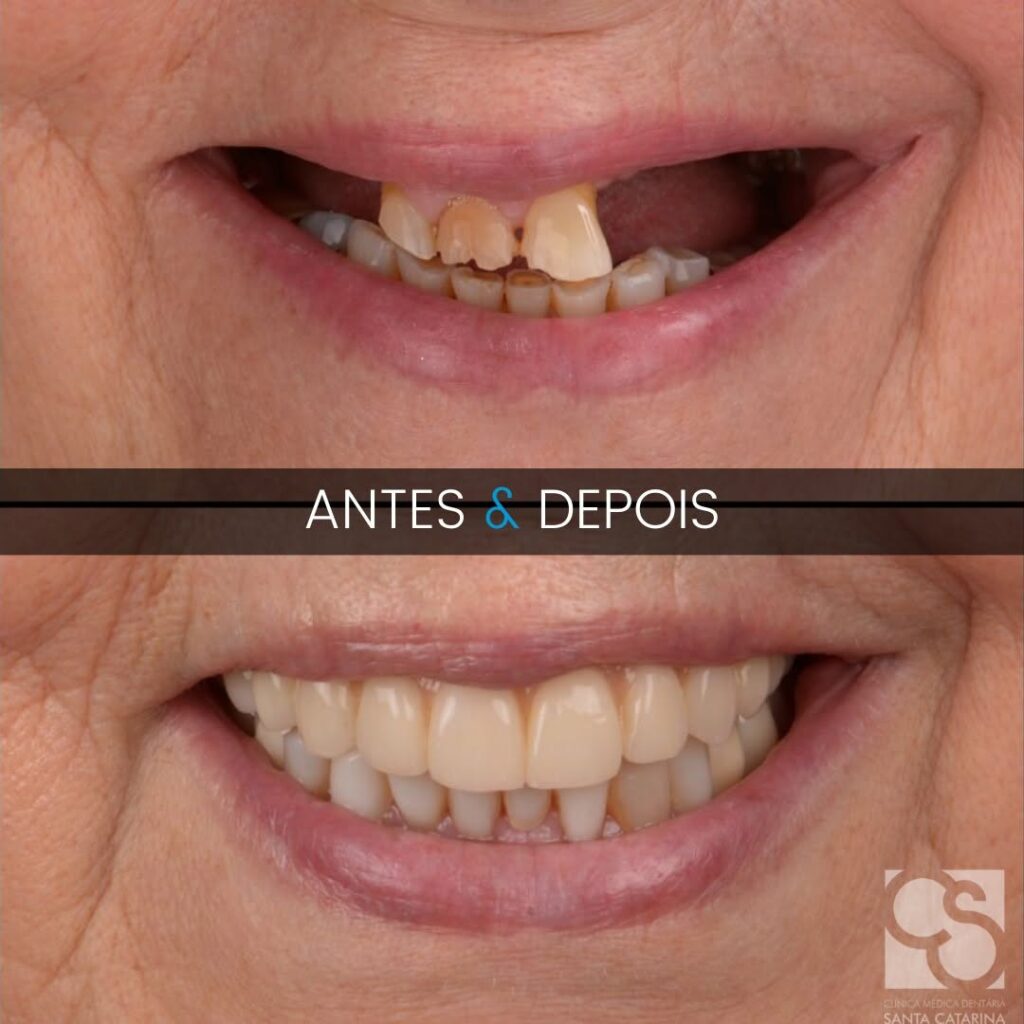
If you are missing all teeth on one arch, you have probably seen two competing solutions: All-on-4 and All-on-6. Both promise a fixed, natural-looking smile in one trip to Portugal, but the difference between four and six implants is not cosmetic. It is biomechanical. Choosing the right number of anchors affects how your new teeth distribute force, how long they last, and whether you need bone grafting at all. This guide to All-on-6 vs All-on-4 in Portugal explains when four implants are more than enough and when those two extra implants become the smartest investment you can make.
In the next 10 minutes you will understand the exact indications our surgeons at the Clínica Dentária Santa Catarina use every day in Porto, how we decide between All-on-6 vs All-on-4 in Portugal from your CBCT scan, what the price and recovery differences are, and which option lowers the long-term risk of fracture or bone loss. For an overview of our dental implant expertise with Straumann-certified solutions, you can start there before diving into the comparison below.
All-on-6 vs All-on-4 in Portugal: The Core Difference in 60 Seconds
The question behind All-on-6 vs All-on-4 in Portugal is simple: how many pillars should hold a 12-tooth bridge? Both protocols are fixed, screw-retained full-arch rehabilitations. You walk in with failing teeth and leave with a provisional bridge on the same day.
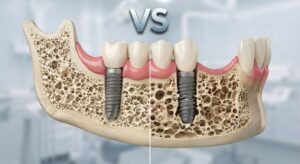
With All-on-6 vs All-on-4 in Portugal, the name tells the story. All-on-4 uses four implants per arch, two straight in the front and two tilted at up to 45 degrees in the back to avoid the sinuses or nerves and to spread the load. All-on-6 adds two implants in the premolar region, creating a broader polygon of support. That wider base reduces the stress on each implant and shortens the cantilever — the unsupported extension beyond the last implant — which is where most acrylic or zirconia fractures start.
How All-on-4 Works: Maximum Efficiency on Four Implants
The All-on-4 concept was created to avoid grafting in many cases. By tilting the posterior implants, surgeons use the dense anterior bone and the available bone in front of the sinus. In our Porto protocol, the All-on-4 in Portugal is placed with guided surgery, a milled titanium bar and a high-density provisional bridge. Nobel Biocare, Straumann and Neodent all publish long-term data on this tilt, and survival rates at five years sit around 96-98% in healthy non-smokers.
All-on-6 vs All-on-4 in Portugal matters because the four-implant bridge is lighter on bone and budget. It needs less bone volume, a slightly shorter surgery, and it costs less. That is why we still recommend All-on-4 for more than half of our full-arch patients with good bone height and no heavy bruxism.
How All-on-6 Adds Security: Six Implants, Less Lever
All-on-6 distributes the same bite force over six points instead of four. The finite element studies cited by Healthline’s review of implant load distribution show and the Springer’s BMC Oral Health study on load distribution confirm that adding two median implants can cut crestal stress by 20-30% on the distal implants. In practice, that means less flex in the framework, less acrylic chipping on 12-unit zirconia bridges, and a safety margin if one implant integrates slower than the others. If you clench or grind, that margin is not luxury. It is insurance.
When Is All-on-4 Enough? Ideal Indications for All-on-6 vs All-on-4 in Portugal
All-on-6 vs All-on-4 in Portugal is not a hierarchy. All-on-4 is not the cheaper compromise. In the right mouth, it is the ideal plan. Our indication for All-on-4 starts with three clinical conditions that we check on your 3D scan before we quote any price.
First, bone volume in the interforaminal or inter-antral region must be at least 10 mm in height and 5 mm in width to host 3.3-4.1 mm Straumann implants without grafting. Second, the bone density should be D2 or D3, the moderate types that grip the implant without being too soft. Third, the opposing arch must not generate extreme forces. That means no severe bruxism, no untreated periodontal trauma, and a planned bridge length of 10 to 12 teeth with a cantilever no longer than 12 mm. When those boxes are ticked, All-on-6 vs All-on-4 in Portugal tilts clearly toward All-on-4.
Good Bone, Moderate Bite, Straightforward Anatomy
Patients aged 45 to 65 who lost teeth to decay or periodontitis but kept decent ridge height are the sweet spot for All-on-4. In our data from Porto, these cases show primary stability above 35 Ncm on all four fixtures, allowing immediate loading. The provisional stays screw-retained for three to four months, then we deliver a final zirconia or titanium-acrylic bridge. One of the reasons many UK and French patients choose All-on-4 here is travel efficiency: one 5-day stay for surgery and immediates, one 4-day stay for the final. The total investment starts around 5,000 euros per arch at Santa Catarina, versus 14,000-18,000 euros for a comparable private solution in France or the UK. See our transparent itemised cost of dental implants in Portugal for the full breakdown.
When Do You Actually Need All-on-6? 7 Clinical Triggers
There are mouths where All-on-6 vs All-on-4 in Portugal is decided before the patient sits in the chair. The CBCT tells us in 30 seconds. If we see any of the seven triggers below, we plan six implants by default and we explain why. This is not upselling. It is engineering.
- Trigger 1 — Thin or soft maxillary bone: Upper jaws that have been edentulous for more than 3 years often show D4 soft bone or a concave ridge.
- Trigger 2 — Need to avoid sinus lift: When the sinus floor sits low and you want to skip a lateral lift, six shorter implants with a wider spread can bypass the sinus wall.
- Trigger 3 — Bruxism or heavy bite: Night grinding multiplies lateral forces by 2 to 3 times.
- Trigger 4 — Long arch or large smile: Patients with a wide inter-canine distance need a 12-tooth bridge.
- Trigger 5 — Previous implant failure: If you have lost an implant before, redundancy helps.
- Trigger 6 — Smoking or controlled diabetes: Both conditions slightly lower the early integration rate.
- Trigger 7 — Opposition from natural teeth or zirconia: Biting against a natural dentition or a zirconia arch creates higher impact than biting against an acrylic denture.
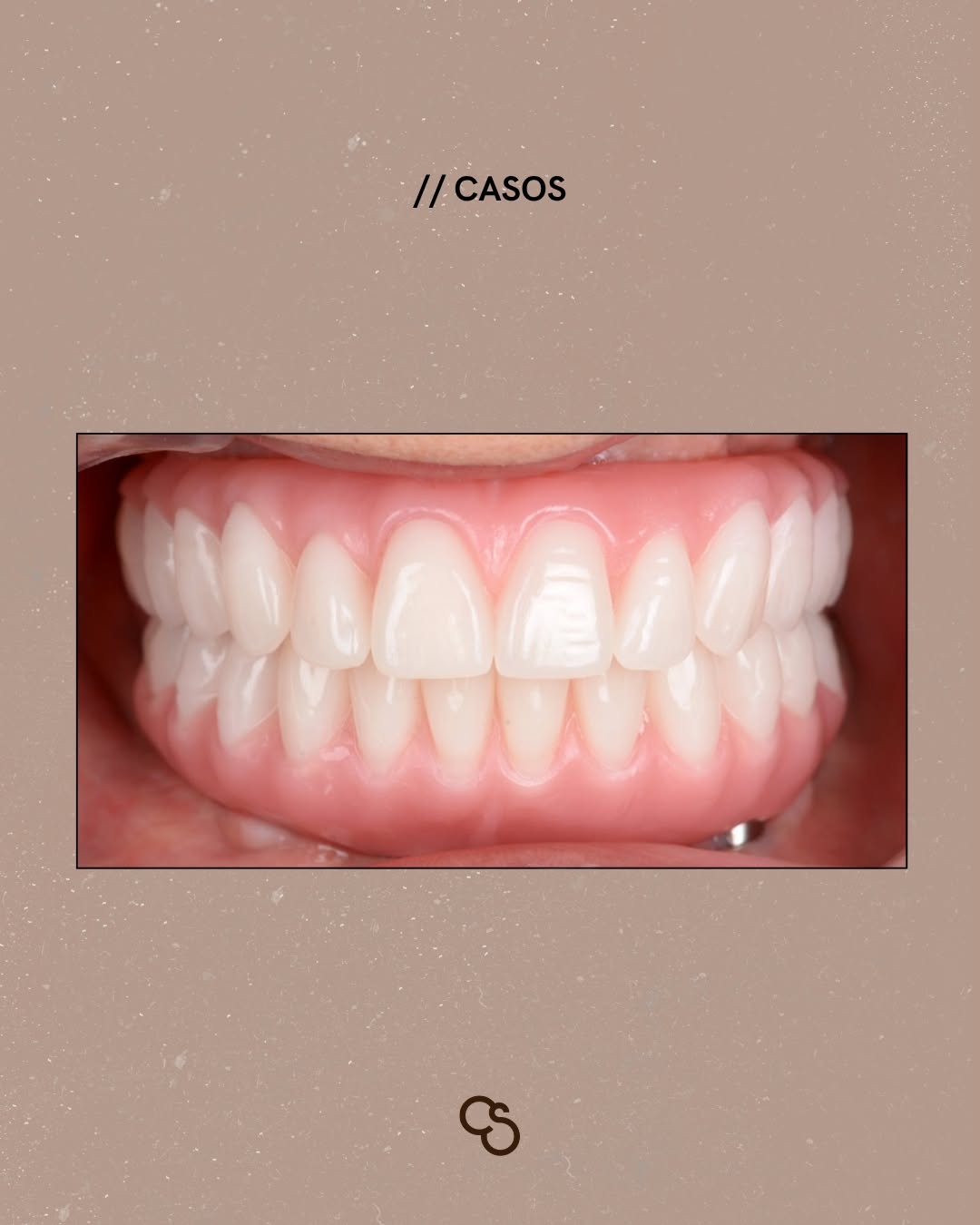
If you tick two or more of these boxes, All-on-6 vs All-on-4 in Portugal stops being a price debate and becomes a durability decision. The extra cost is about 1,300-1,500 euros per arch at Santa Catarina, but it can prevent a framework remake that costs far more.
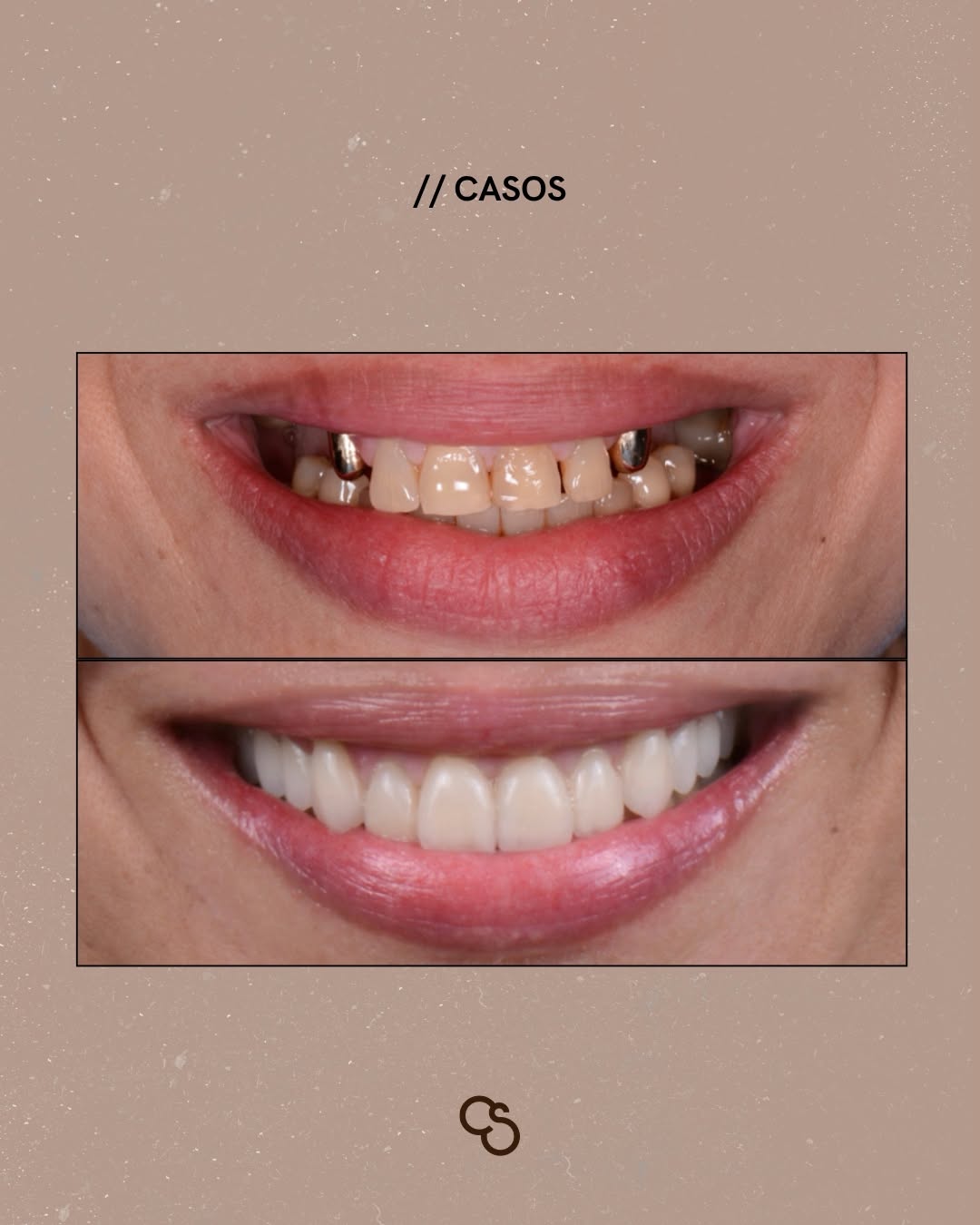
All-on-6 vs All-on-4 in Portugal: Head-to-Head Comparison Table
Patients often ask for a simple table. Here is the distilled comparison we use in Porto when we discuss All-on-6 vs All-on-4 in Portugal chairside. It reflects our clinical fees for 2026, Straumann Roxolid SLA implants, and a final screw-retained bridge with titanium substructure. Prices are per arch, before flights and hotels, and they include surgery, implants, provisional and final.
| Feature | All-on-4 in Portugal | All-on-6 in Portugal |
|---|---|---|
| Implants per arch | 4 (2 straight, 2 tilted) | 6 (2 straight + 4 tilted/straight) |
| Best for | Good bone height, no severe bruxism, medium arch | Soft bone, wide arch, bruxism, long cantilever, prior failure |
| Need for graft | Often avoided | Often avoided; better at avoiding sinus lift |
| Cantilever length | 12-17 mm | 7-10 mm |
| Stress on distal implant | Baseline | -20% to -30% vs All-on-4 (FEA models) |
| Redundancy if one fails | Low — bridge at risk | High — 5 still hold bridge |
| Surgery time (one arch) | 120-150 min | 150-180 min |
| Provisional on day of surgery | Yes, screw-retained | Yes, screw-retained |
| Price per arch (Santa Catarina 2026) | From €5,000 | From €6,350 |
| 10-year prosthetic complications | Higher if cantilever >12 mm or bruxism | Lower in same risk groups |
| Stay in Porto | 5-6 days + 4 days for final | 5-6 days + 4 days for final |
Cost, Recovery and Longevity in Porto: What The Numbers Say About All-on-6 vs All-on-4 in Portugal
Cost drives many decisions, but it should be read per year of service, not per day of surgery. Both All-on-6 vs All-on-4 in Portugal are designed to last 15 to 25 years with maintenance. The difference lies in what you are buying insurance against.
Direct cost: On our 2026 price list, All-on-4 per arch is from 5,000 euros and All-on-6 from 6,350 euros. Both include the implant surgery, four or six Straumann implants, multi-units, a reinforced provisional the same day, and a final titanium-bar bridge 3 to 4 months later. You budget flights and four-star hotel separately. Most patients fly Porto in under two hours from Paris, Brussels or Geneva and spend less than 500 euros on logistics for a week.
Recovery: Swelling peaks at 48 hours for both, then fades by day 5. No one with All-on-6 vs All-on-4 in Portugal should be on liquids for months. The implant team gives you a 30-day food guide we developed with our hygienists in Porto. Pain is typically 2-3 out of 10 with paracetamol and ibuprofen, and stitches are resorbable.
Longevity: The American Academy of Implant Dentistry notes on AAID’s overview of dental implant success factors that implant survival depends more on hygiene and load than on the count alone. In our own follow-up at Santa Catarina, both concepts show survival above 97% at 3 years when the indication is correct. Where the curves diverge is prosthetic maintenance: All-on-4 bridges in bruxers need more tightening and occasional acrylic repair. All-on-6 shows fewer of those events because the load spreads.
How Santa Catarina Decides: Our 3D Diagnosis Protocol for All-on-6 vs All-on-4 in Portugal
Every All-on-6 vs All-on-4 in Portugal decision at Santa Catarina follows the same digital chain. No guesswork, no sales script. We start with data.
Step 1 is imaging: a low-dose CBCT with 0.2 mm voxels plus a panoramic and photos. Step 2 is segmentation: we map the maxillary sinus, the nasal floor, the incisive canal, and the mandibular nerve. Step 3 is virtual placement: we drag four and six implants into the same bone volume and we measure insertion torque prediction, distance to sinus or nerve, and the cantilever that results. Step 4 is the wax-up: a printed try-in of the final teeth shows you the smile line and speech. Only then do we lock All-on-6 vs All-on-4 in Portugal and produce a 3D-printed surgical guide for a flapless or mini-flap approach.
This workflow is run by Dr Paulo Carvalho, our implant lead, and by our in-house lab that mills both provisional and final bridges.
What We Need From You Before We Tell You 4 or 6
Two files are enough for a reliable plan: a recent panoramic X-ray, ideally less than 6 months old, and a list of medications plus any history of smoking or grinding. If you have a CBCT already, send the DICOM. If not, we take it on Day 1 in Porto for 120 euros. We answer within 24 hours with annotated screenshots showing both All-on-6 vs All-on-4 in Portugal options, the cantilever each creates, and our recommendation with reasons you can show your dentist at home. For context on our premises and standards, see our ISO and quality overview of our Porto clinic and the story of our All-on-6 solution in Porto for complex cases.
FAQ: both solutions
We close with the five questions we hear most in the consultation room about both solutions. If you do not see your question, WhatsApp us and you get a surgeon answer, not a bot.
Is All-on-6 always better than All-on-4?
No. Better is defined by your anatomy, not by the number. All-on-6 is stronger on paper because it spreads load and shortens cantilever, but if your bone is dense, your arch is medium, and you do not grind, All-on-4 gives the same predicted survival with less surgery and lower cost. In our practice, both solutions is about right-sizing. Four where four does the job flawlessly, six where physics asks for six.
Will I feel two extra implants more after surgery?
Not meaningfully. The local anaesthesia and the sedation are identical. The extra 30 minutes add two small osteotomies and two healing caps. Swelling and pain scores are indistinguishable at Day 2 in our questionnaires. What changes is the margin during chewing after month one. With All-on-6 vs All-on-4 in Portugal, the six-implant bridge flexes less, so patients who grind report fewer tension headaches and less screw loosening, which is worth more than those 30 minutes.
How does both solutions affect cleaning and hygiene?
Both use a fixed bridge with a small hygienic gap under the flange so you can pass a water flosser and superfloss. Six implants add two more emergence points to floss around, which adds about 60 seconds to your evening routine. No special tools are needed beyond a water flosser, a soft brush, and a once-a-year professional cleaning. Hygiene failure, not implant count, is the first cause of peri-implant bone loss according to every guideline we follow, so we train you before you fly home.
Which option lasts longer: All-on-6 or All-on-4?
Implant bodies last similarly when the indication matches the load. The titanium can stay 20+ years. What differs is the prosthesis. In our monitoring, All-on-4 bridges in ideal bone last as long as All-on-6, but All-on-4 in heavy load or long cantilevers shows more acrylic chipping or screw loosening between years 2 and 5. All-on-6 reduces those prosthetic events. In a bruxer or a long smile, both solutions is therefore longevity insurance. In a calm bite with good bone, the insurance is not needed, and All-on-4 is the elegant answer.
Choosing between both solutions is not a contest of numbers. It is a clinical measurement of bone, bite and bridge length against the physics of a 12-tooth span. If you have generous anterior bone, no grinding, and a compact arch, four Straumann implants give you a fast, proven, economical smile that can last decades. If your upper bone is soft, your smile is wide, you grind at night, or the CBCT shows a cantilever beyond 12 mm, those two extra implants are not an upsell. They are the difference between a bridge that merely survives and a bridge that feels effortless every day.
At the Clínica Dentária Santa Catarina in Porto, founded in 1968 and certified ISO/TC 106, we run that measurement for you before we talk price. You get annotated 3D simulations for both both solutions, a clear recommendation with the why, and a written, all-inclusive quote valid for 30 days.
Ready to know whether you need four or six? Send your panoramic X-ray on WhatsApp to 07 44 03 40 82 or request your free, no-obligation personal quote via the form. Our French-speaking coordinator replies within 24 hours, organizes your two trips from France, Belgium, Luxembourg or Switzerland, arranges airport transfers, and stays with you on WhatsApp long after you are back home. Coming to Porto for both solutions means choosing a fixed smile that is engineered for your mouth, not for a catalogue.