Dental implants in Portugal have become one of the most popular treatments chosen by patients travelling from the UK, Ireland, France, and across Europe. Combining internationally recognised quality of care with prices that are significantly lower than at home, Portugal has established itself as a leading destination for dental tourism Portugal. But before packing your bags, it is worth taking a moment to understand exactly how a dental implant works and what the treatment involves from start to finish.
This guide breaks down every stage of your tooth implant treatment steps in plain, accessible language. Whether you are exploring the idea for the first time or ready to move forward, you will find everything you need here to feel informed and confident before your first appointment.
Why Choose Portugal for Dental Implants?
Portugal consistently ranks among the top destinations in Europe for dental tourism Portugal, and for good reason. Portuguese dentists train to the same European standards as those in the UK, France, or Germany. Clinics are modern, clean, and fully compliant with EU health and safety regulations. Yet the cost of treatment is often two to three times lower than what patients would pay at home.
Beyond the quality of care, Portugal is genuinely easy to reach. Lisbon and Porto are served by direct flights from most major European cities, with journey times of two to three hours. This makes it entirely realistic to combine your dental implants in Portugal with a short break — and still come home having saved a significant sum.
A Destination Built for International Patients
Many clinics across Portugal have built dedicated services for international patients, including treatment coordinators who speak English, French, and other European languages. Remote consultations, digital treatment planning, and detailed written quotes are all standard practice. You can plan every step of your treatment from home before you ever set foot on a plane.
To learn more about what to expect when travelling for dental care and how to prepare your trip, read our complete guide on organising your dental tourism trip to Portugal.
What Is a Dental Implant? A Simple Explanation
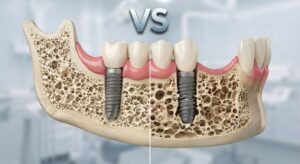
Before exploring the tooth implant treatment steps in detail, it helps to understand what a dental implant actually is. In simple terms, a dental implant is a small screw made of titanium that is placed into the jawbone to replace a missing tooth root. Once it has bonded securely with the bone around it, it provides a stable, permanent base for a crown, bridge, or denture.
According to the Wikipedia overview of dental implants, well-placed implants can achieve five-year survival rates of 93 to 98 percent, making them one of the most reliable long-term solutions available for tooth loss.
Unlike removable dentures, dental implants in Portugal look and feel exactly like natural teeth. They do not shift, do not require adhesives, and do not affect the teeth around them. For most patients, the result is indistinguishable from a natural tooth.
Who Is a Suitable Candidate?
Most healthy adults who are missing one or more teeth are suitable candidates for implants. The main requirements are sufficient jawbone density to anchor the implant securely and good general oral health. Conditions such as uncontrolled diabetes, active gum disease, or heavy smoking can affect healing and may need to be managed before treatment begins.
During your initial consultation, your dentist will evaluate your suitability using digital X-rays or a 3D CBCT scan. If bone volume is insufficient, a preparatory bone graft procedure can often resolve this before implant placement.
Dental Implants in Portugal: The Complete Step-by-Step Treatment
One of the most important things to understand about dental implants in Portugal is that the treatment unfolds in stages over several months. Each stage is essential to the long-term success of your implant. Here is exactly what to expect at every step.
Step 1 — Initial Consultation and Personalised Treatment Plan
Your journey begins with a thorough consultation. Your dentist will examine your mouth, review your dental and medical history, and take diagnostic images — typically digital X-rays and, in many cases, a full 3D CBCT scan of your jaw. This gives a precise picture of your bone structure, the position of nerves, and the ideal placement for your implant.
From this assessment, your dentist builds a personalised treatment plan covering the number of implants required, whether any preparatory work is needed, the expected timeline, and a full cost breakdown. Most clinics offering dental tourism Portugal will carry out this consultation remotely before your first visit, so you arrive fully prepared.
Step 2 — Preparatory Procedures (When Required)
Not every patient needs preparatory treatment, but some do. The most common preparatory procedures are tooth extraction (if a damaged tooth is still in place), bone grafting (to rebuild jawbone volume that has been lost), and sinus lift surgery (a specific type of bone graft used for upper back teeth).
These procedures add time to the overall treatment plan, but they are essential for ensuring your implant has a solid foundation. Your dentist will always discuss whether preparatory work is needed before any commitment is made.
Step 3 — Implant Placement Surgery
This is the central stage of your tooth implant treatment steps. The procedure is carried out under local anaesthesia. You will feel pressure during the surgery, but no pain. Most patients are surprised by how straightforward it is.
The dentist makes a small incision in the gum, creates a precise channel in the jawbone, and places the titanium implant. The gum is then closed with stitches. Each implant typically takes between 30 and 90 minutes to place, depending on the complexity of the case.
Mild swelling and tenderness in the days that follow are perfectly normal. These symptoms are easily managed with standard over-the-counter pain relief and typically resolve within a few days.
Step 4 — Osseointegration: The Healing Phase
After placement, the most critical phase of your treatment begins: osseointegration. This is the natural biological process by which the titanium implant fuses with the surrounding jawbone, creating the stable anchor that will support your final crown.
As explained on Wikipedia’s page on osseointegration, this process involves living bone tissue forming a direct structural connection with the titanium surface — a bond strong enough to support the normal forces of biting and chewing for many years.
Osseointegration typically takes between two and six months, depending on the patient’s bone density and general health. During this period, most patients return home and resume their normal daily life. A temporary crown or healing cap is usually placed to protect the implant site during this phase.
This healing period is why dental implants in Portugal generally require at least two separate trips: one for the placement surgery and one for the fitting of the final crown. Your treatment coordinator will help you schedule these visits as conveniently as possible.
Step 5 — Abutment Placement
Once osseointegration is confirmed — typically verified by a follow-up X-ray — a small connector piece called an abutment is attached to the top of the implant. The abutment acts as the link between the implant buried in the bone and the visible crown that will sit above the gum line.
In some treatment plans, the abutment is placed at the same time as the implant. In others, a brief second procedure is needed to expose the healed implant and attach the abutment. Your dentist will advise which approach is right for your specific situation.
Step 6 — Crown Fitting: The Final Result
The last stage of your tooth implant treatment steps is the fitting of the final crown — the visible, artificial tooth that completes your treatment. Crowns are custom-made in a dental laboratory from high-quality ceramic materials, carefully matched to the colour, size, and shape of your surrounding teeth.
An impression of your mouth is taken — either digitally or using a traditional mould — and sent to the lab. When the crown is ready, it is fixed to the abutment either with a small screw or with dental cement. The final result is a permanent tooth that looks, feels, and functions exactly like a natural one.
How Much Do Dental Implants in Portugal Cost?
Cost is a primary motivation for patients who choose dental implants in Portugal, and the savings are substantial. Even when travel and accommodation are factored in, the total cost of treatment abroad is typically far lower than the equivalent at home.
| Treatment | Average price in the UK | Average price in France | Average price in Portugal | Estimated saving |
|---|---|---|---|---|
| Single implant (implant + crown) | £2,000 – £3,000 | €1,500 – €2,500 | €700 – €1,100 | Up to 60% |
| Implant + bone graft | £3,000 – £4,500 | €2,500 – €4,000 | €1,200 – €2,000 | Up to 55% |
| Full arch (All-on-4) | £12,000 – £20,000 | €10,000 – €18,000 | €5,000 – €9,000 | Up to 55% |
| Full arch (All-on-6) | £15,000 – £25,000 | €12,000 – €22,000 | €7,000 – €12,000 | Up to 55% |
These figures are indicative. Your exact price will depend on the number of implants needed, whether preparatory procedures are required, and the specific materials used. A detailed written quote is always provided before any treatment begins.
How to Plan Your Trip for Dental Implants in Portugal
Planning a trip for dental implants in Portugal is more straightforward than most patients expect. The key is to allow enough time between visits and to coordinate your travel arrangements around your treatment schedule.
How Many Trips Will I Need?
For a standard single implant, most patients need two trips: the first for the implant placement surgery (typically two to three days), and the second for the crown fitting after osseointegration is complete (typically one to two days). If preparatory procedures are required, an additional trip or a longer first stay may be needed.
Your treatment coordinator will build a clear, personalised schedule around your availability so that you always know what to expect and when.
What About Aftercare?
Once your dental tourism Portugal treatment is complete, regular dental check-ups at home are recommended to maintain your implant long-term. Your dentist in Portugal will provide full documentation of your treatment — including X-rays, materials used, and care instructions — to share with your local dentist.
With good daily hygiene and routine maintenance, a well-placed implant can last a lifetime. Brush twice daily, use interdental brushes around the implant, and attend check-ups as recommended.
Frequently Asked Questions About Dental Implants in Portugal
Are dental implants in Portugal safe?
Yes. Dental clinics in Portugal operate under EU health and safety regulations and use the same approved implant systems as clinics in the UK, France, or Germany. Choosing a reputable clinic with documented experience in implantology is the most important step in ensuring a safe outcome.
Will the treatment be painful?
The placement surgery is carried out under local anaesthesia. You will feel pressure but no pain during the procedure itself. Mild discomfort, swelling, and tenderness in the days that follow are normal and manageable with standard pain relief.
How long does the full treatment take?
From placement surgery to final crown fitting, the full process typically takes between three and six months. This timeline is largely determined by the osseointegration period, during which the implant bonds with the jawbone. Preparatory procedures such as bone grafting may extend the overall timeline.
Can I fly home after the implant surgery?
Most patients are able to fly home the day after their implant surgery. Your dentist will advise you on the ideal timing based on your individual recovery. It is generally recommended to rest for 24 hours after the procedure before travelling.
What happens if I have a problem after I return home?
Reputable clinics offering dental implants in Portugal to international patients provide post-treatment follow-up support remotely. Issues such as minor discomfort, questions about healing, or the need for additional advice can be managed by video or email consultation. In the unlikely event that an in-person review is needed, your clinic will work with you to arrange a convenient appointment.
Do dental implants in Portugal come with a guarantee?
Many clinics offer a written guarantee on the implant components — typically covering the titanium fixture for a defined period. The terms vary between clinics and should always be confirmed in writing before treatment begins. Your treatment coordinator will explain the guarantee conditions clearly during the planning stage.