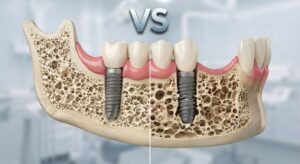
Choosing the right dental crown on implant is the final step that decides how natural your new tooth looks, how long it lasts, and how comfortably you chew every day. At Clínica Dentária Santa Catarina in Porto, patients often arrive after comparing confusing quotes from home — same implant, very different crown prices and materials. This guide clarifies the three options we use every day: zirconia, ceramic and E-max, with 2026 prices from €400, lab data and a clear decision path based on your tooth position and bite.
In this comparison you will see what a single tooth implant cost in Portugal includes from consultation to crown, why zirconia dominates for molars while E-max wins for front teeth, and how our Porto lab mills both materials in-house for precision. You will also find a table, longevity data and the full timeline so you can plan one or two short stays with our English-speaking team.
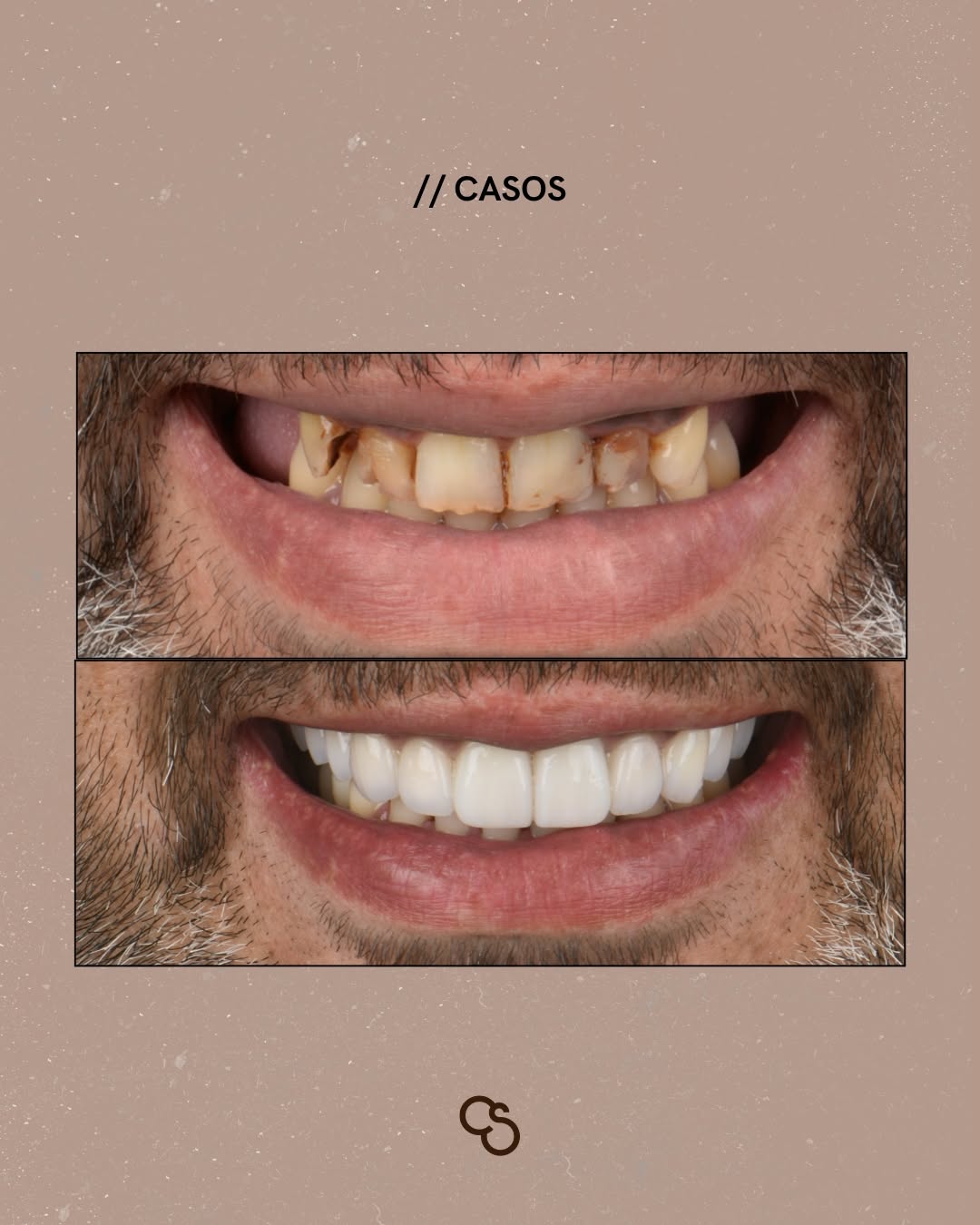
What Is a Dental Crown on Implant and How Does It Work?
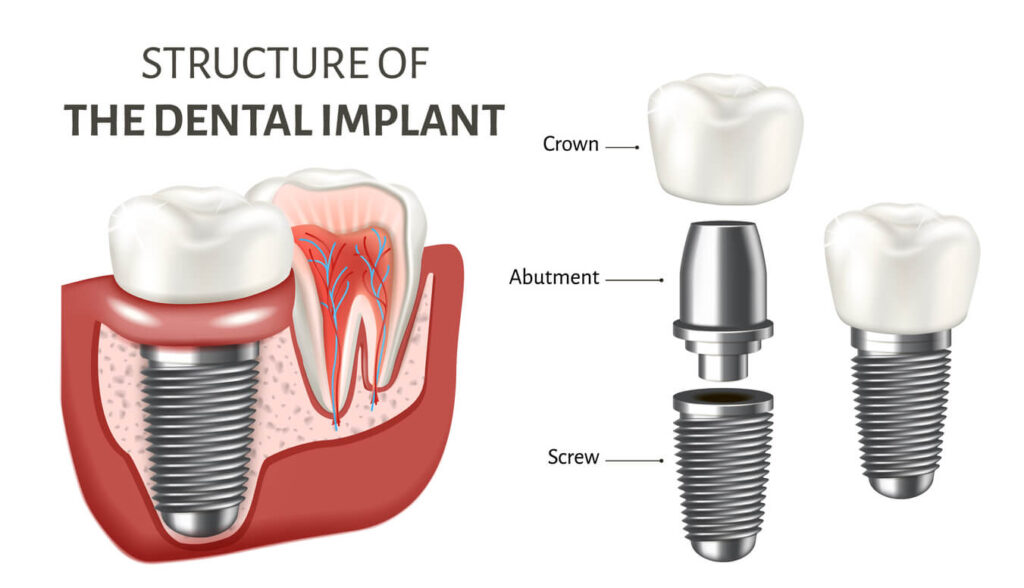
A dental crown on implant is not the implant itself. The implant is the titanium or zirconia screw anchored in bone, the abutment is the connector, and the crown is the visible tooth. Only the crown determines shade, surface texture and how light passes through the tooth. That is why two patients with the same Straumann implant can have very different aesthetic results depending on whether the crown is zirconia, layered ceramic or E-max (lithium disilicate).
At Santa Catarina, every dental crown on implant is designed digitally after a 3D intraoral scan. The scan captures the opposing teeth, bite and gum line in 0.02 mm accuracy, then our CAD/CAM software designs the crown shape before milling. This digital flow avoids traditional impressions and ensures precise contacts.
The 3 parts of a dental crown on implant: implant, abutment and crown
Think of the system in layers. The implant replaces the root and fuses with bone in 8-12 weeks through osseointegration. The abutment, usually titanium or zirconia, is screwed onto the implant and shapes the gum. The dental crown on implant is then cemented or screw-retained onto the abutment. Screw-retained crowns are preferred in Porto because they are retrievable: if the crown chips years later, we can unscrew it without cutting.
Material choice only affects the crown and sometimes the abutment, not the implant. A Straumann implant from €850 can support a €400 or €480 crown — biology identical, result different. Every quote itemises the three parts.
Why the crown material matters for your bite and smile
Posterior teeth endure 200-300 N, anterior teeth less but are judged on translucency. Zirconia resists high force, E-max offers superior light transmission, ceramic sits between but is more fragile. Wrong material for the position is the top cause of chipping.
Patients who grind at night (bruxism) need special attention. In those cases a monolithic zirconia dental crown on implant is almost always safer, and we add a night guard. For non-grinders with a high smile line, an E-max crown on a zirconia abutment gives the most natural edge translucency, especially for incisors and canines.
Zirconia vs Ceramic vs E-max: Complete Comparison for Dental Crown on Implant
All three materials can produce an excellent dental crown on implant when indicated correctly. The differences are in flexural strength, wear on opposing teeth, translucency and repairability. The table below summarises what we observe daily in our Porto lab and what peer-reviewed data confirms.
| Criteria | Zirconia (Monolithic) | Ceramic (Feldspathic / Layered) | E-max (Lithium Disilicate) |
|---|---|---|---|
| Flexural strength | 900-1,200 MPa – highest, ideal for molars | 90-150 MPa – lowest, risk of chipping | 360-500 MPa – high for anterior/premolar |
| Best indication | Molars, premolars, bruxism, long bridges | Veneers, single anterior when layered on zirconia | Single anterior, premolar, aesthetic zone |
| Aesthetics / Translucency | Good (modern translucent zirconia), opaque core if low-grade | Excellent layered, but fragile | Excellent – enamel-like light transmission |
| Wear on opposing teeth | Low when polished | Moderate | Low-moderate |
| Longevity (5-year survival) | 96-98% monolithic* | 89-94% layered* | 94-97% single crowns* |
| Repairability | Replace crown; rarely chips | Chipping = often replacement | Replace; adhesive bonding possible |
| Price at Santa Catarina (crown only) | from €400 | from €400 | from €480 |
| Price + abutment + implant (single tooth) | from €1,350 (implant €550 + abutment €400 + crown €400) | from €1,350 | from €1,430 |
If you need a single dental crown on implant in the aesthetic zone, E-max is usually our first choice because its translucency mimics natural enamel. For a molar where chewing force dominates, zirconia is the safest long-term value. Traditional layered ceramic is now reserved for cases where a feldspathic veneer is layered onto a zirconia coping for maximum artistry, not as a monolithic molar crown.
Zirconia dental crown on implant: when strength is non-negotiable
Monolithic zirconia is milled from a single block and sintered at 1,500°C. That process gives it the highest fracture toughness of the three. In our follow-up of posterior crowns, polished zirconia shows less antagonist wear than earlier generations. According to a recent Springer review on monolithic zirconia crowns, 5-year survival exceeds 96% when polishing protocols are respected. At Santa Catarina we polish, never glaze, posterior zirconia for that reason.
E-max dental crown on implant: the aesthetic benchmark for front teeth
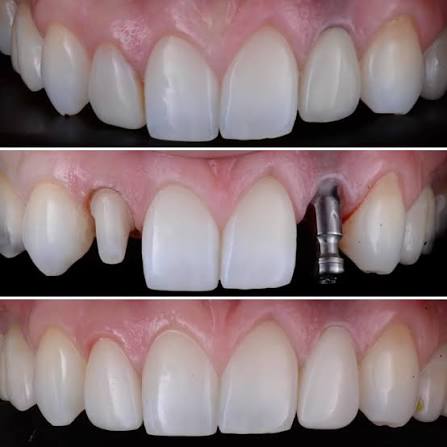
E-max is a lithium disilicate glass-ceramic. Its crystals are etched and bonded adhesively, giving a lifelike edge translucency that zirconia still cannot fully match. For a single dental crown on implant at positions 11-13 or 21-23, E-max on a zirconia abutment often fools even dentists on photographs. A PMC systematic review of lithium disilicate crowns reported 94-97% survival at 5 years for single crowns, with most failures being debonding rather than fracture, which is retrievable.
Price of a Dental Crown in Portugal (2026): What You Actually Pay
Transparency is the first reason patients fly to Porto. In Portugal a dental crown on implant is quoted as crown only and as total single-tooth cost. At Clínica Dentária Santa Catarina the crown itself starts at €400 for zirconia or ceramic and €480 for E-max. The full single tooth (implant + abutment + crown) starts at €1,350 with a standard implant (€550) and at €1,730 with Straumann from €850. There are no separate lab fees: milling, design and polishing are included.
Compared with France, the UK and Germany, savings are 50-70% for the same components. A zirconia dental crown on implant billed €1,200-€1,600 in France is €400 here because the lab is in-house and the clinical workflow is digital. For full arches the crown cost is embedded in the All-on-4/All-on-6 packs: from €5,000 for surgery + provisional, €6,350 for definitive without titanium bar, €9,500 with bar, and €11,170 with Straumann + bar.
Itemised breakdown: crown, abutment and implant
Here is how a typical quote reads: Implant (Neodent/Anthogyr/DIO) €550, titanium abutment €350-€400, zirconia dental crown on implant €400, 3D scan and planning included, provisional crown if needed included. With a Straumann implant the line becomes €850 + abutment €400 + E-max crown €480 = €1,730. If bone grafting or sinus lift is required, we add it once after CBCT — you approve before travel, no surprise on arrival.
Portugal vs France/UK: how much you save on a implant crown
Three posterior crowns cost €4,050 in Porto vs €7,500-€9,900 in France for the same choice. As our zirconia vs titanium comparison shows, we never upsell a premium implant when a standard one with the right crown works.
Durability, Strength and Aesthetics: Which Dental Crown on Implant Lasts Longest?
Patients ask two questions: will it chip and will it still look natural in ten years? Longevity of a dental crown on implant depends on material, bite, hygiene and whether the crown is screw-retained. Well-designed zirconia and E-max crowns both exceed 94% survival at 5 years in current literature, but they fail differently.
Zirconia fails rarely, and when it does it is usually a loss of retention (screw loosening) that we retighten in 10 minutes. Ceramic layered crowns fail by chipping of the veneering porcelain — the most common technical complication in older studies. E-max fails by debonding or, in bruxers, by bulk fracture. Polishing, correct occlusal scheme and a night guard reduce all three risks dramatically, which is why our protocol includes occlusal adjustment with articulating paper and a follow-up at 2 weeks.
5-year and 10-year survival data for implant crown
Monolithic zirconia tracks 96-98% at 5 years (above 92% at 10 years), E-max 94-97% at 5 years, layered ceramic 89-94%. Our remakes since 2018 are below 1.5% for zirconia molars.
Aesthetics: translucency, shade match and gum line
In the smile zone, E-max wins because its refractive index is close to enamel and it can be stained internally for subtle mamelons. Modern high-translucency zirconia (5Y-TZP) has closed the gap, but on a dark implant abutment or discoloured neighbour, we prefer a zirconia coping with a thin E-max or ceramic veneer on the buccal face — the strength of zirconia with the light play of ceramic. For molars no one will see, monolithic zirconia polished to enamel gloss is the cleanest and most durable choice.
How to Choose the Right Dental Crown on Implant for Your Case
The right dental crown on implant is not a catalogue choice, it is a clinical indication. At your video consultation we ask for a panoramic X-ray or CBCT, photos of your smile, and a short note on grinding, smoking and expectations. With those three elements we can recommend zirconia, ceramic or E-max before you book flights, so you travel with a clear plan and price.
For UK and French patients who want reassurance, check our 7 safety checks for dental tourism in Portugal before you book and see how ISO certification, traceable Straumann components and our in-house lab guarantee traceability of every crown.
Front tooth vs molar: different implant crown, different material
Front teeth: choose E-max on zirconia abutment for translucency (or high-translucency zirconia if you grind). Molars: choose monolithic zirconia, screw-retained, polished. Mixed cases combine both materials in one lab session.
For a full-arch All-on-4 or All-on-6, the prosthesis is not a collection of single crowns but a bridge. There we use monolithic zirconia with a titanium bar when needed, because a single E-max bridge of 12 teeth would fracture. See our Nobel prosthetics overview for retained bridges: Nobel Biocare crowns and bridges prosthetic options.
Patient profiles: grinder, smoker, high smile line
Grinder: monolithic zirconia implant crown + night guard, avoid pure E-max on molars. Smoker: zirconia again, because any chipping that requires replacement heals slower in smokers, so we minimise technical risk from the start. High smile line (gums show when you smile): zirconia abutment + E-max crown for front, to avoid grey show-through and to match neighbouring enamel translucency.
Budget tip: posterior = zirconia from €400 for best value, anterior = E-max from €480 for best aesthetics.
Your Treatment Journey for a Dental Crown on Implant at Clínica Santa Catarina (Porto)
Getting a implant crown in Porto is designed for international patients: clear steps, short stays, and follow-up from home. Most single crowns need one stay if the implant is already integrated, or two stays if we place the implant and crown together.
Day 1: CBCT, scan and shade. Days 2-3: implant placement if needed with provisional when bone allows. After 8-12 weeks healing with WhatsApp check-ins, you return 2-3 days for milling, bite adjustment and final screw-retention.
Timeline: from first scan to final implant crown
Week 0: online quote based on your X-ray. Week 1-2: travel for placement + provisional (optional). Weeks 2-12: osseointegration, no special diet after day 3. Week 12-14: second stay for definitive crown. Total chair time for the crown itself is under 3 hours spread over two visits. For patients who already have an integrated implant elsewhere, we can deliver the final implant crown in a single 3-day stay.
Warranty, follow-up and reimbursement support
Implants carry a lifetime guarantee, crowns carry a 3-year lab warranty against fracture or shade mismatch due to lab work. We remain available on WhatsApp after you return home, and we coordinate with your dentist for routine checks. Invoices detail implant, abutment and implant crown separately with French and English translation, ready for your mutuelle, CPAM or insurer under EU cross-border care rules.
FAQ: implant crown in Portugal
How much does a implant crown cost in Portugal in 2026?
A single implant crown costs from €400 for zirconia or ceramic and from €480 for E-max at Santa Catarina, Porto. The complete single tooth (implant + abutment + crown) starts at €1,350 with a standard implant and €1,730 with Straumann. Full-arch crowns are included in All-on-4/All-on-6 packs from €5,000. Your written quote lists each line separately.
Which lasts longer: zirconia or E-max implant crown?
Both exceed 94% at 5 years, but zirconia has a slight edge for posteriors (96-98%) while E-max leads for anterior aesthetics. Bruxism, hygiene and bite adjustment affect longevity more than brand. With a night guard and 6-month hygiene, both materials regularly reach 10+ years.
Is a implant crown better screw-retained or cemented?
Screw-retained is preferred for a implant crown because it is retrievable, avoids cement residue under the gum, and makes future repair simple. We use cemented only when screw access would compromise incisal aesthetics, and then with minimal cement and a venting technique.
Can I get a implant crown in one trip to Porto?
Yes, if your implant is already integrated (placed 3+ months ago) we can scan and deliver the definitive crown in 2-3 days. If we place the implant now, you need a provisional for 8-12 weeks then a second short stay for the final crown. Immediate provisional crowns are possible the same day when bone stability allows.
How do I choose between zirconia, ceramic and E-max for my implant crown?
Choose by position and bite: front incisors → E-max on zirconia abutment (or high-translucency zirconia if you grind), premolars → E-max or zirconia, molars → monolithic zirconia. Share a smile photo and X-ray at your online quote and we will recommend the material with price for each option so you can decide confidently before booking.
Ready to decide with confidence? Send your X-ray on WhatsApp for a free, itemised plan within 24 hours. Whether you need a single implant crown or a full smile reconstruction, our Porto team — in place since 1968, ISO-certified, Straumann-certified — will show you exactly which crown fits your bite, your aesthetics and your budget, and you will leave with a fixed price, no surprises.
Get your free implant crown quote in 24h →