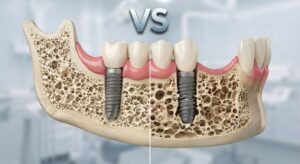
If you are researching dental implants, you have probably stumbled on the same dilemma: zirconia vs titanium implants, and every article seems to give a different answer. Some praise ceramic implants as the future, others insist titanium is the only safe choice. At the Clínica Dentária Santa Catarina in Porto, we have placed Straumann implants for decades, and we believe patients deserve a clear, evidence-based verdict rather than marketing.
The honest answer is that zirconia vs titanium implants is not a battle with one universal winner — it depends on the tooth, your gum, your aesthetic priorities and your budget. Before we explain our recommendation, it helps to know how we select the main implant brands used in Portugal, because material and brand go hand in hand. In this guide, we compare both materials with real clinical data, explain where zirconia genuinely wins, and tell you exactly which option our Porto clinic recommends for which patient.
Our clinic has been treating international patients since 1968 and is certified under the international dentistry standard ISO/TC 106. We fit CE-certified Straumann implants with a lifetime warranty, and we price them transparently — a single implant from €850 with the full crown, or from €550 for standard brands. Every choice we make, including zirconia vs titanium implants, is guided by the published evidence and by what actually works in the mouth over many years.
Zirconia vs Titanium Implants: The Real Differences
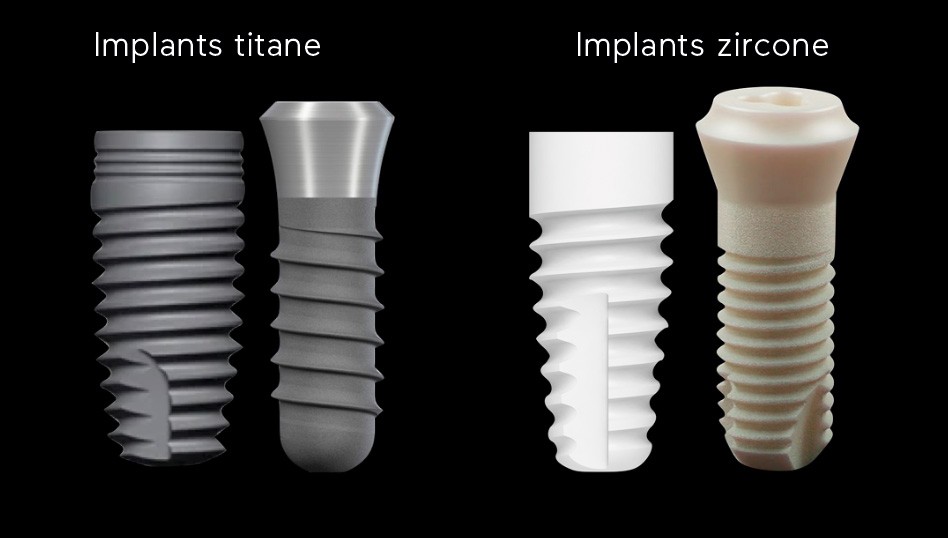
The two materials could not be more different in origin and behaviour. Titanium is a biocompatible metal that has been the reference material in implantology for over fifty years. Zirconia is a white ceramic — technically zirconium dioxide — that entered implantology later, primarily for its tooth-like colour and its metal-free composition. Understanding the two materials starts with these fundamentals.
Titanium implants: the proven standard
Titanium has an exceptional track record. Since Brånemark discovered osseointegration in the 1960s, titanium implants have been placed in tens of millions of patients. The metal bonds directly with living bone, offers outstanding mechanical strength, and is flexible enough for two-piece systems where the abutment is attached separately. This two-piece design is why titanium remains the workhorse of modern implantology.
The clinical evidence for titanium is enormous. Long-term studies consistently report 10-year survival rates above 95% for single titanium implants, which is why the great majority of the 45+ implant articles on our site refer to titanium systems. When a patient prioritises predictability above everything, the weight of evidence currently sits with titanium.
Zirconia implants: the aesthetic challenger
Zirconia implants are milled from a block of yttria-stabilized zirconia, a ceramic originally used in orthopaedics for hip replacements. Because the implant is white, it does not create the greyish shadow that a titanium fixture can sometimes produce through a thin gum or an all-ceramic crown. For patients with high aesthetic demands, this is the main argument in the zirconia vs titanium implants debate.
The trade-off is a shorter clinical history. Zirconia implants were widely introduced only in the 2000s, and they are usually available as one-piece systems, which limits their use in multi-stage protocols such as All-on-4. Many practitioners also consider zirconia more fragile in thin diameters, and long-term data, although growing, is still less extensive than for titanium.
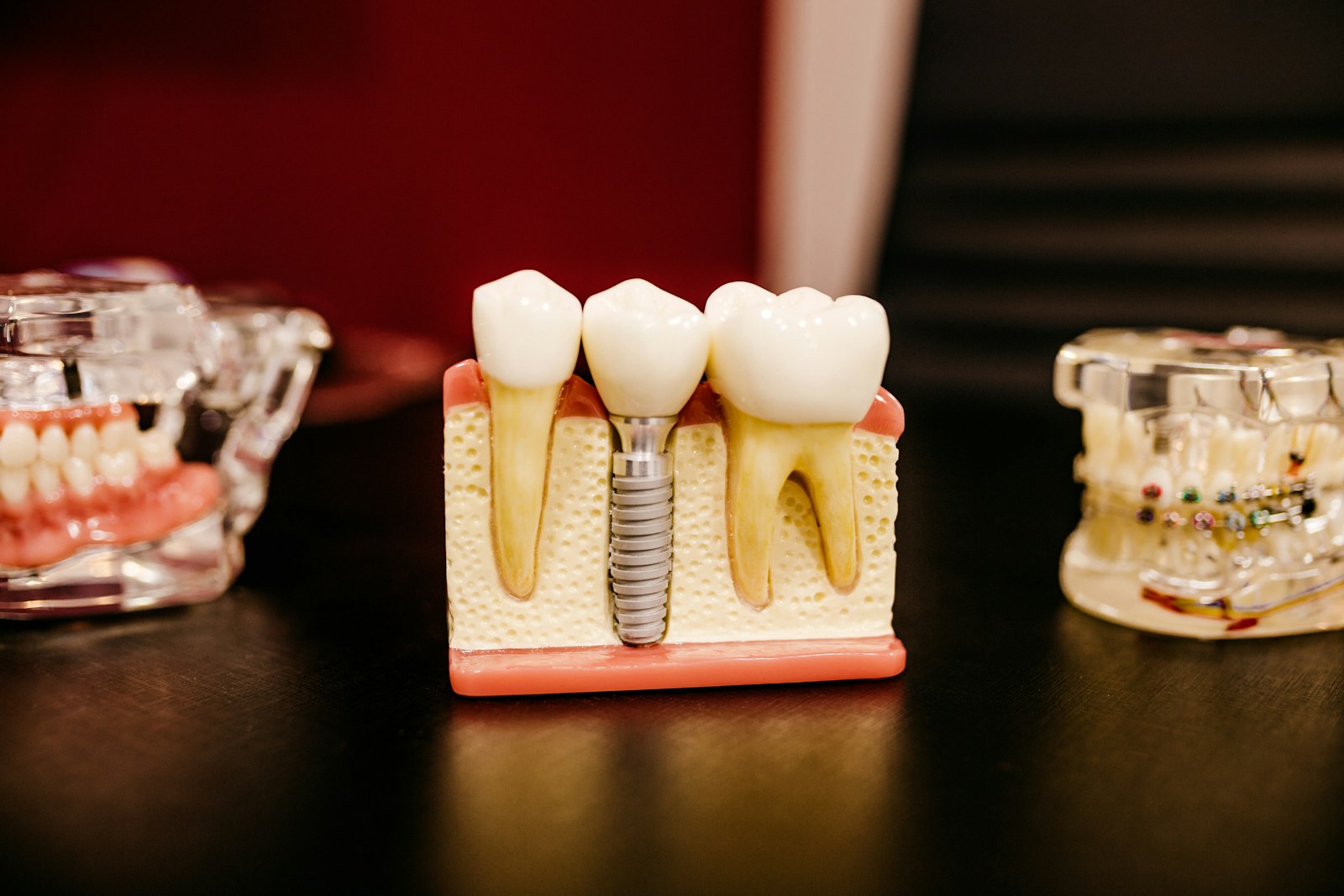
A titanium implant with crown: the proven standard in implantology.
Survival Rates: What the Research Actually Shows
No comparison is credible without numbers, so we start with the most studied question in the implant literature: survival. A 2024 systematic review and meta-analysis of randomized controlled trials compared zirconia and titanium dental implants head to head. The conclusion was clear: titanium implants showed a better survival rate (77.6% versus 70.3%) and significantly less marginal bone loss at 12 months (0.18 mm versus 0.42 mm).
Meta-analyses on zirconia vs titanium implants
It is important to interpret these numbers correctly. The 70.3% and 77.6% figures come from RCTs with short follow-up, and the survival gap partly reflects the much younger history of zirconia systems. A 2023 systematic review and meta-analysis reached a more nuanced conclusion: at 12 months, zirconia and titanium implants showed similar survival rates, with zirconia even scoring higher on pink aesthetic parameters in the gum area.
Putting both reviews side by side, the honest reading of the zirconia vs titanium implants research is this: short-term, zirconia performs well and can look better; long-term, titanium has decades of uninterrupted evidence that zirconia has not yet accumulated. For most patients, predictability wins.
Marginal bone loss and gum response
Bone loss around an implant is the main early warning sign of future failure. The 2024 meta-analysis measured less bone loss around titanium at 12 months, which matters for the long-term survival of the implant. That said, much depends on the clinician: plaque control, the implant surface and the loading protocol influence bone remodelling as much as the material itself.
At our Porto clinic, we monitor bone levels systematically after placement. This is part of why we confidently make an evidence-based material choice — and why we encourage patients to focus on the clinical protocol, not only on the material name printed on a brochure.
Aesthetics, Allergies and Everyday Performance
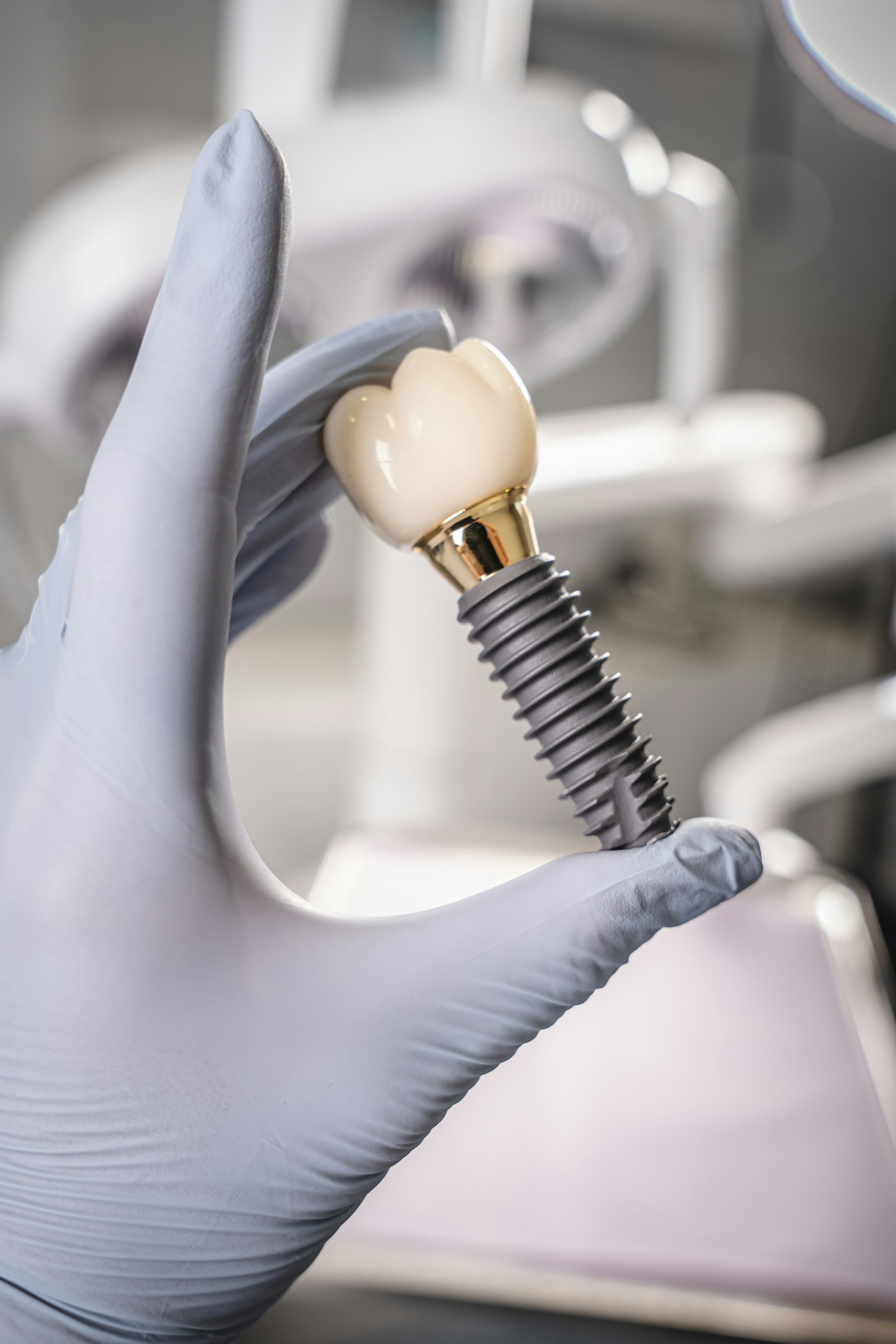
Survival data only tells part of the story. In daily practice, the choice between zirconia vs titanium implants is often decided by aesthetics, metal sensitivity and how the implant will be restored.
When zirconia genuinely wins
Zirconia shines in the aesthetic zone. For upper front teeth where the gum is thin, the white ceramic avoids the metallic shadow that titanium can create. Zirconia is also the answer for the very small group of patients with a confirmed metal allergy or who simply refuse any metal in their body. In those situations, a one-piece zirconia implant placed in good bone can deliver an excellent aesthetic result.
There is also a subtler point: some patients report a psychological benefit from choosing a “metal-free” material. While allergy to titanium is genuinely rare — far rarer than it is portrayed online — the option exists and we respect it. This is why we do not simply dismiss the zirconia side of the zirconia vs titanium implants question.
Where titanium remains ahead
Titanium still dominates in three practical areas. First, two-piece designs let us place the implant, let it heal, and fit the crown weeks later — essential for All-on-4 and All-on-6 protocols. Second, titanium handles thin diameters and full-arch loads with more mechanical margin. Third, titanium has a fifty-year evidence base that makes warranty promises, including our Straumann dental implants with a lifetime warranty, truly meaningful.
In our experience, patients who choose titanium get the widest range of future options: if you later need a bridge, an All-on-4 or a sinus lift with grafting, the titanium platform is the safest foundation. This flexibility matters for patients planning several implants or a full rehabilitation later in life.
Zirconia vs Titanium Implants: The Comparison Table
Here is the one-page summary our surgeons use when explaining the zirconia vs titanium implants decision to patients in consultation.
| Criterion | Titanium implant | Zirconia implant |
|---|---|---|
| Material | Biocompatible metal (Ti grade 4) | White ceramic (zirconium dioxide) |
| Clinical history | 50+ years, millions of cases | Introduced widely in the 2000s |
| Survival at 12 months (2024 meta-analysis) | 77.6% | 70.3% |
| Marginal bone loss at 12 months | 0.18 mm (less) | 0.42 mm (more) |
| Aesthetic zone (thin gum) | Can show grey shadow | Tooth-coloured, discreet |
| Design options | One-piece and two-piece | Mainly one-piece |
| All-on-4 / All-on-6 compatible | Yes, standard | Limited |
| Metal allergy option | Rarely an issue | Metal-free alternative |
| Long-term published evidence | Extensive | Growing but shorter |
| Price at our Porto clinic | From €550 (standard) / €850 (Straumann) | Premium range, on request |
Sources: published meta-analyses referenced above; 2026 tariff grid of the Clínica Dentária Santa Catarina, Porto.
What Our Porto Clinic Recommends — and Why
After decades of placing implants and following patients for the long term, our answer to the zirconia vs titanium implants question is deliberately pragmatic.
Why we default to Straumann titanium
For the vast majority of patients, we recommend titanium — specifically CE-certified Straumann implants with a lifetime warranty. The reasons are the ones above: superior long-term evidence, lower bone loss, full compatibility with All-on-4 and All-on-6, and a restoration system that lets us replace or upgrade crowns without touching the implant. When the foundation of your smile is the most important decision, we choose the material with the longest proof of reliability. You can read our detailed reasoning in our guide to how long dental implants really last.
When we offer zirconia options
We do recommend zirconia in specific cases: a front tooth with very thin gum where aesthetics are the priority, a confirmed metal allergy, or a patient who strongly prefers a metal-free solution. In those situations, a one-piece zirconia implant can be an excellent choice, and we will tell you honestly when that is the case. The key is that the decision must come from a clinical examination and a 3D scan — not from a preference stated in an online article about zirconia vs titanium implants.
Whatever the material, the fundamentals stay identical: a strict aseptic protocol, a precise 3D-guided placement, and a team of implantologists who have trained surgeons across the world. That is the level of care you should expect when comparing zirconia vs titanium implants in Portugal.
Many of our patients travel from France, Belgium, Luxembourg, the UK and Canada. A direct flight from Paris or Brussels to Porto takes under two hours, and our team includes a French-speaking coordinator who manages your appointments, your airport transfer and your WhatsApp follow-up once you are back home. This is a practical advantage of choosing a Porto clinic that no comparison of materials alone can capture.
FAQ: Zirconia vs Titanium Implants
Are zirconia implants better than titanium implants?
Not universally. Zirconia offers better aesthetics in the front zone and a metal-free option, but titanium shows stronger survival and less bone loss in the latest meta-analyses and has a far longer evidence base. For most patients, titanium remains the safer default in the zirconia vs titanium implants choice.
Can zirconia implants be used for All-on-4?
Generally, no. All-on-4 and All-on-6 rely on angled, two-piece titanium implants that carry the full arch. Zirconia implants are mostly one-piece systems, which is why full-arch protocols are almost always built on titanium.
Are titanium implants safe for people with metal allergies?
True titanium allergy is extremely rare — much rarer than it is claimed online. If you have a documented allergy, zirconia is the metal-free alternative. At our clinic, a proper allergy history is taken before any zirconia vs titanium implants recommendation.
Do zirconia implants cost more?
Yes. Zirconia implants are generally more expensive to produce, and the price reflects a shorter production history. In practical terms, the price difference matters less than the clinical indication — and our dental implant costs in Portugal are among the most competitive in Europe.
How long does each type of implant last?
Well-maintained titanium implants routinely last 15 to 25 years and often a lifetime. Zirconia has a shorter follow-up in the literature, so long-term claims are still being documented. Your own longevity depends above all on your oral hygiene and regular check-ups.
Conclusion: Which Material Should You Choose?
The material decision should never be made on hype. If you want the strongest long-term evidence, the widest choice of treatments and the best value, titanium — and specifically a premium brand such as Straumann — is the recommendation we give to most of our patients in Porto. If you have thin gums in the aesthetic zone, a confirmed metal allergy, or a strong preference for a metal-free solution, zirconia can be the right answer, and we will tell you so honestly.
What you should not do is decide alone from an article. A 3D scan and a clinical examination reveal the bone quality, gum thickness and tooth position that truly determine which material suits you. That is exactly what a free consultation at the Clínica Dentária Santa Catarina in Porto provides — a clear, honest recommendation on the right material, with prices you can trust.
Get your free implant quote within 24 hours. Send us your dental X-ray or panoramic scan via WhatsApp and receive a written, itemised treatment plan — the same premium Straumann protocol used across Europe, at prices up to 70% lower than in France, the UK or Canada. Your new smile starts with a simple message.