Turning 70 does not mean you have to live with loose dentures, chewing pain or missing teeth. At the Clínica Dentária Santa Catarina in Porto, a growing number of patients aged 70, 80 and beyond are getting dental implants for seniors that restore a fixed, comfortable smile — often in just one or two trips. The key is not the number of candles on your birthday cake, but the state of your bone, your general health and the experience of the team that treats you.
This article explains exactly what dental implants for seniors involve: how bone loss is handled, which risks are real, what the surgery feels like over 70, what it costs, and what real patients who travelled to Portugal have to say. If you have been told you are “too old” for implants, read on — the evidence, and the smiles, tell a different story.
Our clinic has been helping patients since 1968, is certified under ISO/TC 106, and places premium Straumann implants certified CE with a lifetime warranty. Get your free quote in 24h and find out what is possible for you.
Dental implants for seniors: is age really a barrier?
The first question most families ask when a relative reaches 70 or 75 is whether dental implants for seniors are still a safe option. The short answer is yes — and the medical literature agrees. Age in itself is not a contraindication for implant surgery. What determines candidacy is the patient’s general health, the quality of the remaining bone, and the ability to follow post-operative instructions.
What the scientific evidence says
Clinical studies on implantology routinely include patients in their 70s and 80s, and implant survival rates in this group remain high when the medical screening is thorough. A healthy 75-year-old with well-controlled blood pressure is often a better candidate than an unhealthy 55-year-old who smokes or has untreated diabetes. The deciding factors are medical, not chronological.
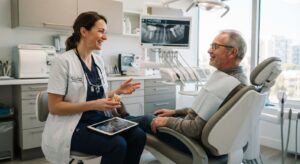
This is why the first consultation matters so much. During a free assessment, the dentist reviews your medical history, evaluates bone volume with a 3D scan and explains the realistic options for dental implants for seniors. You leave with a written treatment plan and a clear price — no vague promises, no pressure. For an overview of why oral health matters throughout life, consult the WHO oral health fact sheet.
The takeaway is simple: do not self-disqualify based on age. If your overall health allows minor surgery under local anaesthesia, then dental implants for seniors are almost certainly on the table. The real work begins with a proper evaluation, and that evaluation is free.
Bone health and dental implants over 70: how bone loss is managed
The most common concern for this age group is a simple one: “Will I have enough bone for dental implants over 70?” It is a fair question. After a tooth is lost, the jawbone begins to shrink because it no longer receives the stimulation that roots provide during chewing. The longer teeth have been missing, the more bone volume can be lost, and this loss often accelerates in older adults.
Why jawbone shrinks with age
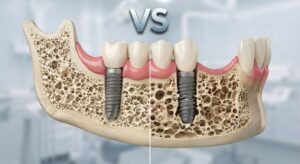
Bone is living tissue that renews itself constantly. When a tooth is lost, the bone around the socket is no longer loaded, and it resorbs gradually over time. In older patients, the density of the upper jaw (maxilla) often decreases more than the lower jaw (mandible), which is why many seniors struggle to keep an upper denture in place. The same bone loss is what makes fixed implants so attractive: they restore the chewing function that keeps bone healthy.
Bone grafting before implantation
A reduced bone volume does not disqualify you from treatment. It simply means the plan must include bone reconstruction. The techniques used at Santa Catarina include sinus lifts for the upper jaw and bone grafts to rebuild width and height in the lower jaw. In many cases, the All-on-6 protocol with bone grafting even includes the grafting in the package price, so there is no unpleasant surprise later.
You can learn more about the bone graft procedure explained step by step on our dedicated page. The key point for dental implants for seniors is this: modern bone reconstruction makes it possible to place implants even where the bone looked too thin on a regular X-ray.
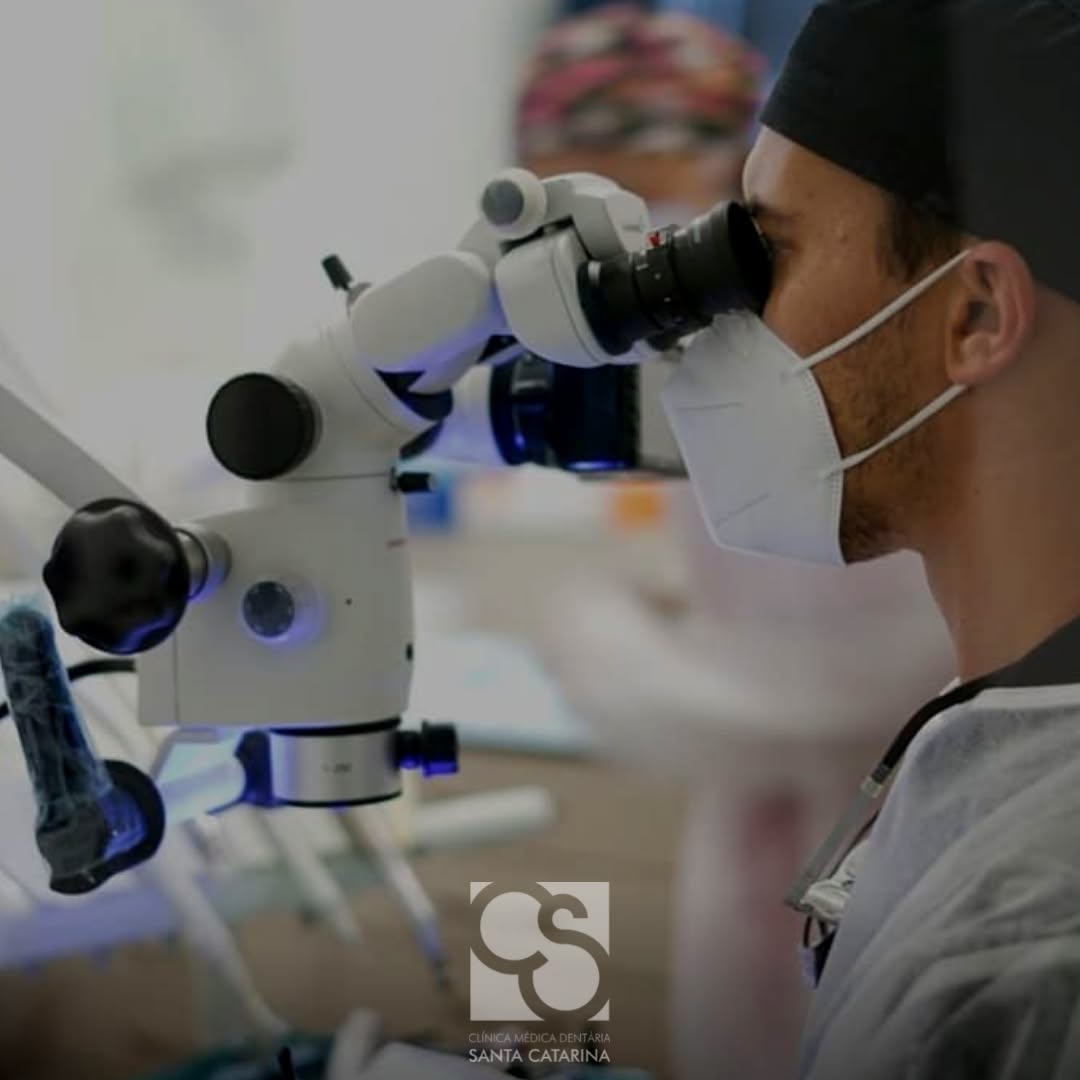
With modern planning — 3D scans and guided surgery — the surgeon knows exactly where to place each implant before the first incision. This precision reduces operating time, bleeding and post-operative discomfort, all of which matter for older patients. It also means shorter visits to Porto and a faster return home.
Risks of dental implants for seniors and how they are prevented
No surgical procedure is risk-free, and it would be dishonest to pretend otherwise. The risks of dental implants for seniors fall into two categories: medical risks linked to your health, and surgical risks linked to healing. Both are largely manageable with the right preparation and the right team.
Medical risks and the pre-op assessment
Before any implant placement, the clinic carries out a complete medical review: blood pressure, diabetes control (HbA1c), cardiovascular history, anticoagulant medication and osteoporosis treatment. Some blood thinners must be paused under medical advice, and patients with well-controlled diabetes heal just as well as anyone else. This assessment is free at the consultation and is the single most important step for your safety.
Surgical and healing risks
The main surgical risks are infection, nerve irritation and, over time, peri-implantitis — an inflammation around the implant. They are prevented by strict sterilisation protocols, antibiotic prophylaxis when indicated, and a hygiene programme you take home. Because the implants placed in Portugal are the same CE-certified devices used across Europe, the implant itself is not a variable — the skill of the surgeon is. This is why you should choose a clinic with decades of implantology experience and a clear after-care plan.
For independent clinical background on long-term outcomes, you can consult clinical studies on dental implants in elderly patients on PubMed. The pattern across studies is consistent: complication rates for dental implants for seniors stay low when patients are properly selected and followed.
It is also worth remembering that many of the “risks” reported online are actually about neglected maintenance. An implant, like a natural tooth, needs brushing, flossing and regular check-ups. The clinic provides written home-care guidelines and follows patients by WhatsApp after they return home, which keeps long-term risk minimal.
Best dental implants for seniors: All-on-4 and All-on-6
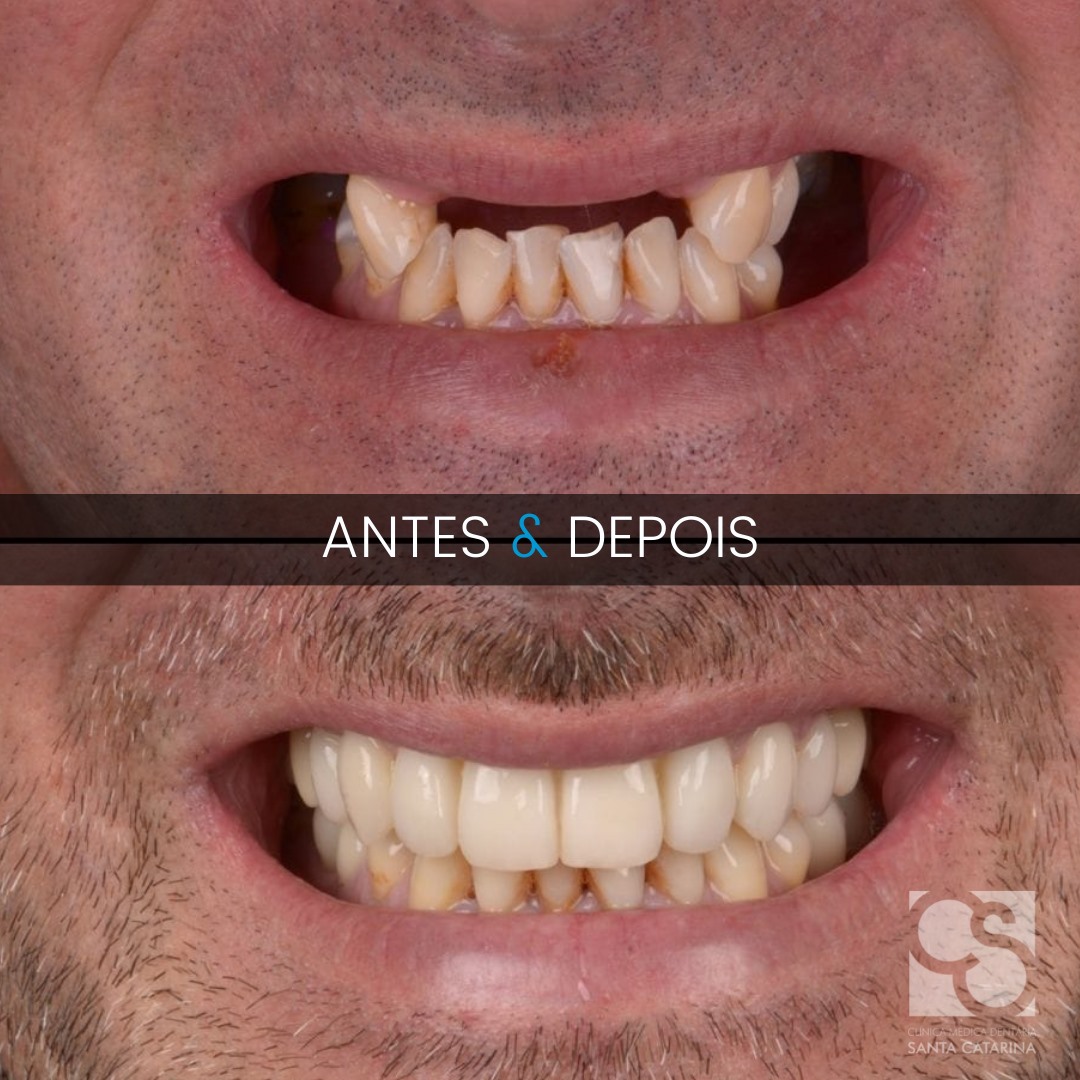
For patients who have lost most or all of their teeth, individual implants become impractical and expensive. The solution most seniors choose is a full-arch rehabilitation on implants: four or six implants supporting a fixed, screw-retained prosthesis. These protocols were designed precisely for older patients with limited bone, and they are now the standard for dental implants for seniors.
Fixed teeth in a single trip
In many cases, the teeth can be loaded the same day the implants are placed. The patient arrives in Porto in the morning, the surgery takes place under local anaesthesia, and by the evening they leave the clinic with a fixed temporary prosthesis. No more adhesive paste, no more wobbling denture, and no more avoiding restaurants.
- All-on-4 uses 4 implants, positioned to take advantage of the strongest bone zones.
- All-on-6 uses 6 implants and includes bone grafting in its base package — the preferred option when bone is weak.
- Both protocols restore a fixed smile of 10 to 12 teeth per arch.
The Straumann advantage
Premium results begin with premium components. The clinic works with Straumann implants — a Swiss brand certified CE, backed by decades of clinical research and supplied with a lifetime warranty. For patients over 70 who want peace of mind for the years ahead, the reliability of a world-class implant brand and the guarantee are decisive arguments.
The choice between All-on-4 and All-on-6 is made after the 3D scan, based on your bone volume and the load your new teeth will have to support. Whichever protocol is chosen, the goal for dental implants for seniors is identical: a fixed, functional smile that you can eat with and forget about.
Dental implants over 70: the treatment journey in Porto
You do not need to live in Porto to be treated here. The clinic has welcomed international patients for years, with direct flights from Paris, Brussels and Lyon in under two hours. A French- and English-speaking coordinator handles every detail, an airport driver picks you up, and a WhatsApp follow-up is set up before you fly home. For dental implants over 70, the practical organisation is designed to be as stress-free as the surgery itself.
Step-by-step timeline
- Day 1 — Consultation and scan: free assessment, 3D X-ray, treatment plan and written quote.
- Day 2 — Surgery: implants placed, temporary fixed teeth attached where possible.
- Days 3-5 — Recovery: light check-up, hygiene instructions, medication plan.
- Return home: recovery continues at home; the team stays in touch by WhatsApp.
- Month 4-6 — Final prosthesis: second visit to receive the permanent fixed teeth.
The total time on-site is rarely more than one to three working days per visit. For patients in good general health, recovery is similar to that of a much younger person: some swelling for a few days, soft foods for a short period, then a progressive return to normal eating.
Success stories from real patients
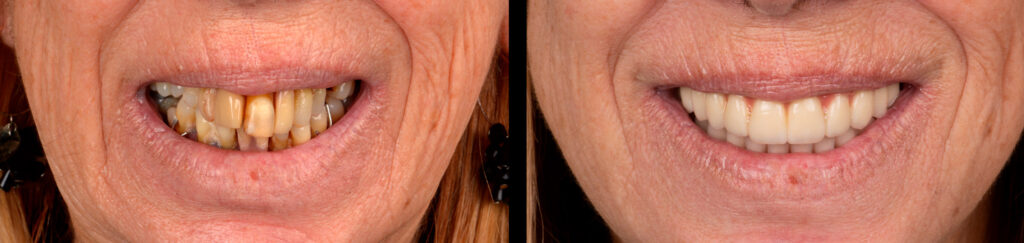
The most convincing data is the patients themselves. The clinic’s case files include numerous patients in their 70s and 80s who arrived with broken dentures or complete tooth loss — and left with a fixed smile they could eat, speak and laugh with. A retired patient in her late 70s arrived from France with an upper denture she could no longer keep in place. After a sinus lift and six implants, she reported eating an apple again for the first time in years.
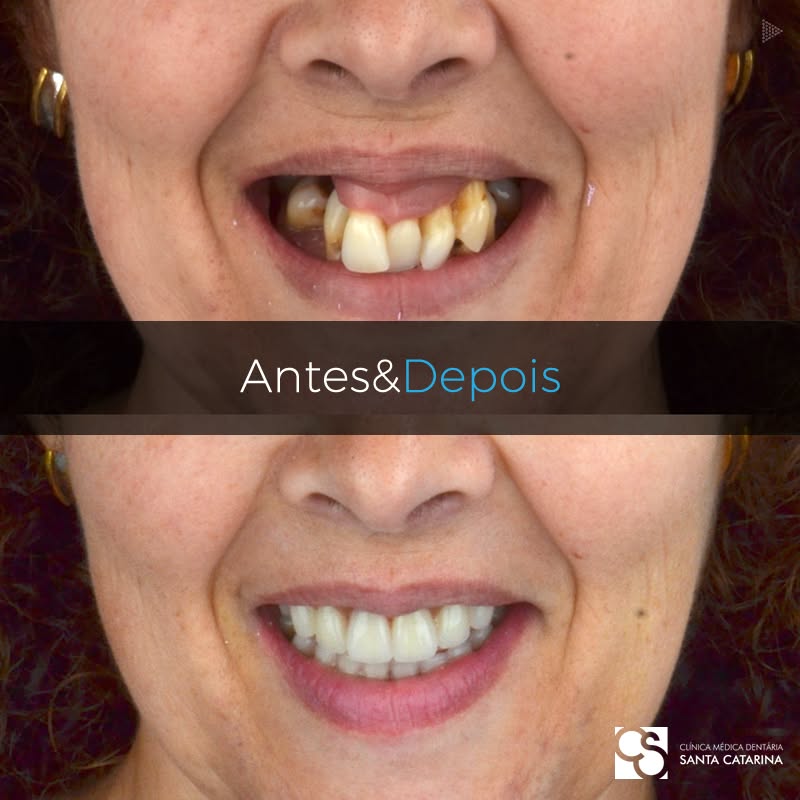
Another patient, aged 82, underwent a full-arch rehabilitation and stopped all pain medication after day two. These outcomes are consistent across the clinic’s records: dental implants for seniors deliver a fixed, functional smile regardless of age, provided the bone and medical criteria are met. Patients consistently mention three things — the absence of pain during the procedure, the professionalism of the team, and the savings compared with their home country.
Cost of dental implants for seniors in Portugal vs UK, US and Canada
Cost is often the deciding factor for pensioners, and here Portugal offers a significant advantage. Prices are transparent and all-inclusive, with no hidden extras for anaesthesia, follow-up visits or the temporary prosthesis. See the full dental implant cost in Portugal for a detailed breakdown.
Transparent pricing table
| Treatment | Price in Portugal |
|---|---|
| Single implant (standard brand) | from €550 |
| Straumann implant | from €850 |
| All-on-4, surgery + fixed temporary teeth | from €5,000 per arch |
| All-on-6, surgery + bone graft + temporary | from €5,000 per arch |
| Premium titanium-bar fixed prosthesis | from €9,500 per arch |
| Straumann premium package | from €11,170 per arch |
Compared with the United Kingdom, the United States and Canada, these prices typically represent savings of 50% to 70% for the same materials and the same certified implants. A full-arch rehabilitation that might cost £20,000 or $30,000 at home is often obtained in Porto for a fraction of that — including two stays and the final prosthesis. For many seniors, this difference is the difference between doing nothing and restoring their smile.
Reimbursement for international patients
European citizens can benefit from cross-border healthcare under Directive 2011/24/EU on patients’ rights in cross-border healthcare, which allows reimbursement of dental care carried out in another EU country under your national scheme. Patients from the UK, US and Canada can also structure their treatment and payment with the clinic’s coordinator, who issues all the documentation needed for insurance, HSA and FSA claims.
Planning the budget for dental implants for seniors is therefore much easier than it seems. The coordinator sends a complete, itemised quote in advance, so you know exactly what you pay and what is included before you book any flight.
Conclusion: your smile is not a question of age
Dental implants for seniors over 70 are safe, well-proven and, with modern planning, far more comfortable than most patients expect. The real requirements are healthy enough bone, controlled medical conditions and an experienced clinic. Our certified dental clinic in Portugal meets all of them: since 1968, certified ISO/TC 106, Straumann implants with a lifetime warranty, and a team that has guided thousands of older patients to a fixed smile in one or two trips to Porto.
Why keep struggling with dentures when a fixed smile is a short flight away? Request your free quote in 24h by WhatsApp at +33 7 44 03 40 82 — you will receive a personalised treatment plan, a transparent price and clear answers about your case. Dental implants for seniors can change your daily life, and your new smile can start at any age.