You bite into soft bread and feel a tiny click under your tooth. Nothing hurts, but something clearly moves. A loose implant crown is the second most common mechanical issue after healing, far behind loss of osseointegration, and it almost never means the titanium root itself has failed. In most cases, only the visible ceramic or its small fixation screw has loosened and can be re-secured in one visit.
The trap is to keep chewing normally or to glue it yourself. To act safely, this 2026 guide explains why crowns loosen, what to do in the first 24 hours, and how we fix it in Porto with original Straumann or Nobel parts. If your crown sits on a recent implant still healing, read our dental implants aftercare 12-month recovery timeline first: a crown that moves during the first weeks follows different rules from a loose implant crown years later.
You will find the screw versus cement comparison table, the 24-hour safety protocol, Porto repair costs and delays, and prevention for grinders.
Loose implant crown: why it feels different from a natural tooth
Three parts where movement can hide
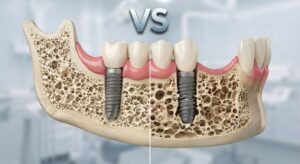
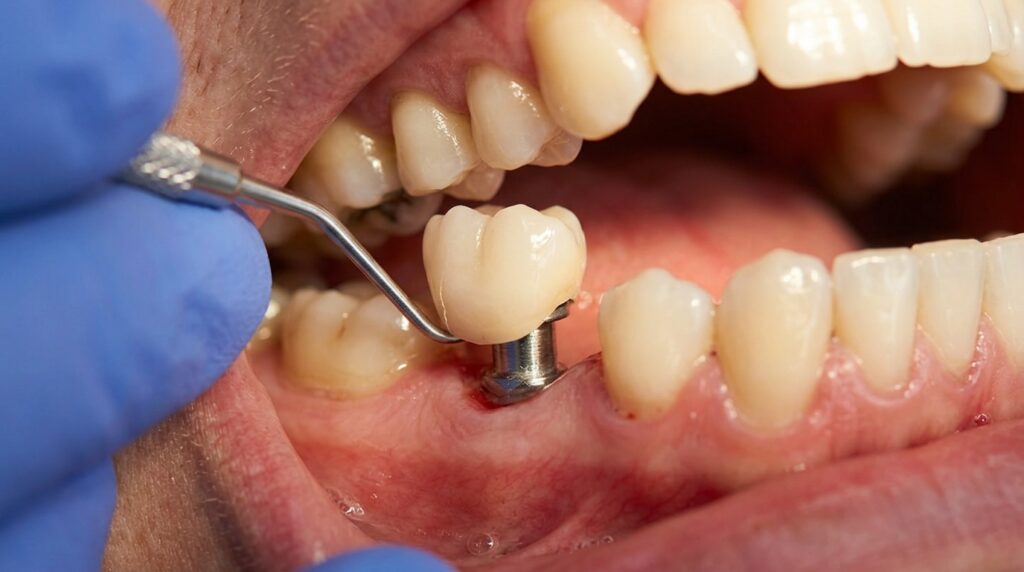
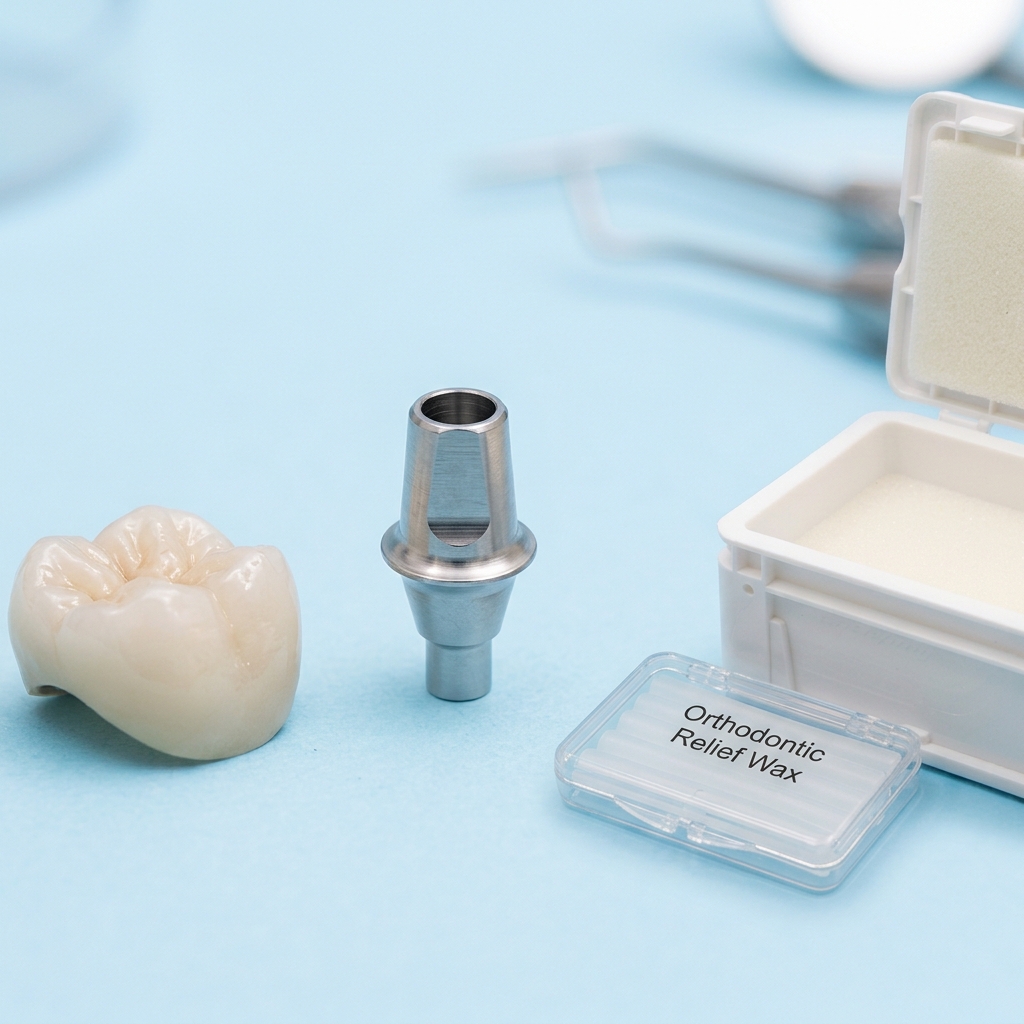
A natural tooth hangs in a ligament that absorbs shocks. An implant is rigid: titanium root fused to bone, abutment screwed at 30 Newton centimetres, crown glued or screwed on top. When patients report a wobbling crown, the movement comes from one of three levels: the crown unglued from the abutment, the abutment screw unscrewed a quarter turn, or rarely the implant itself mobile in infected bone. Only the third case is serious, and it bleeds, smells and aches, unlike a clean painless click.
At Clínica Dentária Santa Catarina in Porto, founded in 1968 and ISO/TC 106 certified, every crown is torqued with a calibrated driver and the value written in your implant passport. A wobble caught early costs a simple re-tightening; ignored for months, the same wobble wears the screw, cracks the ceramic and traps bacteria that threaten the bone.
The three signs of a loose implant crown
Clicking when you tap teeth together, food packing suddenly on one side, and a crown that feels higher than neighbours in the morning. Floss shredding around one crown is another classic hint: the gap opened by micro-movement catches fibres. None of these means emergency, but all mean stop chewing on that side and book a check within days.
- Click without pain: usually screw or cement, fixable.
- Wobble you can feel with your tongue: do not push it, stabilise the bite.
- Swelling, pus or dull ache plus mobility: possible bone issue, same-week visit.
Understanding these levels already answers half of why crowns loosen: mechanics first, biology second.
Screw loosening: the number one cause of loose implant crown
Preload loss, settling and overload explained simply
A screw holds because tightening stretches it like a spring, creating preload that resists chewing forces. Microleakage, settling of parts under first loads, abutment angulation and insufficient torque all bleed that preload away. A recent PubMed study on abutment screw stability lists microleakage, settling effects, loss of preload, abutment angulation and inadequate torque among contributing factors: exactly what we check first when a loose implant crown arrives in Porto.
Single molars carry the highest risk because bite forces peak there, especially with a high crown, wide diameter or external hex connection. Grinding at night multiplies cycles and loosens even well-torqued screws within months. That is why we deliver a night guard to every bruxer and re-check torque at month 3.
Why single crowns loosen more than bridges
A 2024 study on abutment designs and heights found taller abutments with increased crown height space raise screw loosening risk, measured across implant-abutment designs. One molar crown takes full lateral load alone, while a bridge shares it across implants. If your moving crown is a single molar placed years ago without torque control, screw fatigue is the prime suspect rather than infection.
Good news: a loosened screw rarely damages the implant body when caught early. Re-torque to manufacturer value with new screw if threads are worn, and the loose implant crown becomes rock solid again.
Cement failure and other causes of loose implant crown
Washed-out cement and short abutments
Cement-retained crowns rely on a thin glue layer between crown and abutment. Saliva, short abutment walls under 4 millimetres, tapered shape or excess cement left under the gum weaken that bond over 3 to 7 years. The crown then lifts cleanly, often swallowed unnoticed in sleep, while the abutment stays firm. For material differences that affect that bond, see our zirconia versus ceramic versus E-max crown guide: monolithic zirconia loosens differently from layered ceramic under the same bite.
| Fixation | How a loose implant crown shows | Main causes | Fix in Porto |
|---|---|---|---|
| Screw-retained | click, tiny vertical play, access hole visible | preload loss, grinding, high crown | new screw, calibrated re-torque, 30 min |
| Cement-retained | crown lifts whole, abutment firm | short abutment, washed cement | clean, re-cement or convert to screw, 45 min |
| Implant mobile | whole block moves, ache, pus | peri-implantitis, overload, fracture | CBCT, deep cleaning or replacement |
Sources: Porto prosthetic reports 2025–2026 (214 crowns), PubMed screw loosening study, 2024 abutment-height study. France single crown on implant 900–1800 euros indicative.
Fracture, overload and rare implant mobility
A cracked ceramic shoulder mimics loosening: rough edge, dark line, sensitivity to cold. Biting ice, olive pits or opening bottles cracks even zirconia over time. True implant mobility in bone stays rare under 3 percent with Straumann tissue-level designs, and always brings inflammation signs. Pain plus swelling plus mobility means bone control with CBCT within days, not months.
Smokers and uncontrolled diabetics combine both risks: weaker bone plus stronger bite overload. Our smoking and implants guide with failure rates shows why we ask for 7 tobacco-free days around any repair visit.
Loose implant crown: what to do in the first 24 hours
Save the crown, protect the bite
Hour 0: stop chewing that side, remove the crown gently if it comes free and keep it in a clean box, never in a tissue you may throw away. Do not swallow-check by wiggling hard. If the crown fell while eating, check stools are not needed: swallowed crowns pass naturally in 48 hours, but inhaled with coughing needs emergency X-ray. Photograph the abutment underneath in daylight and note pain 0 to 10.
Strict forbidden list for 24 hours
No chewing gum, no superglue or dental cement from the internet, no wrench on the tiny hole, no pulling the abutment with pliers. Eat soft on the opposite side, lukewarm, no straw if the gum bleeds around the abutment. Rinse once with lukewarm salt water, brush around gently. Message us the photos with crown type, implant brand if known, and travel dates: we tell you within hours whether a local dentist can stabilise or Porto repair is better.
- Keep: crown, implant passport, last X-ray.
- Do: soft food opposite side, photo check, night guard if you grind.
- Never: re-glue at home, chew to test, ignore pus or fever.
At the dentist: how a loose implant crown is fixed in Porto
Screw check under microscope in 30 minutes
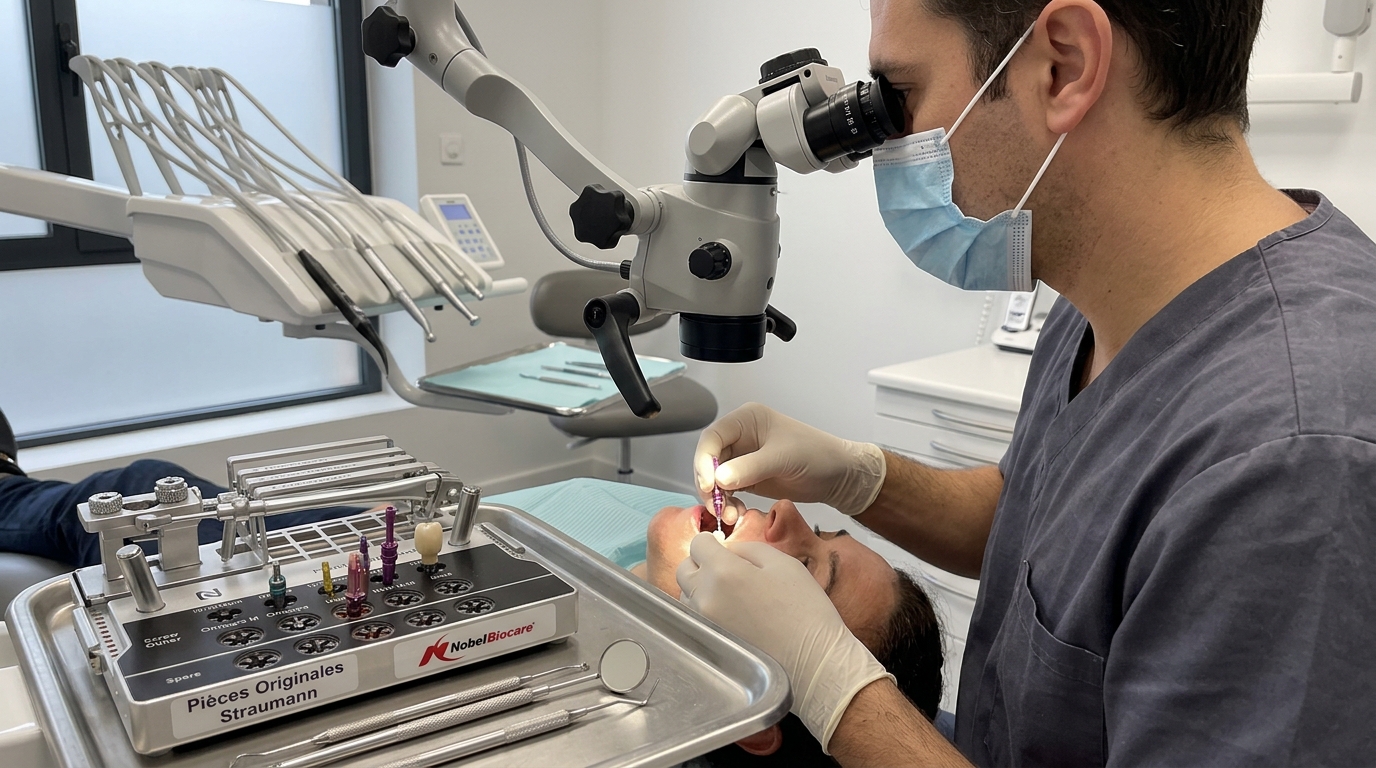
We remove the access filling, measure unscrewing torque, inspect threads under magnification and X-ray the seating. Intact threads get a brand-new original screw torqued to 30 to 35 Newton centimetres depending on system, then a composite seal. Worn threads or stretched screw always get replaced, never reused: a 40-euro screw protects a 1500-euro crown. You leave biting normally the same hour.
Re-cement or convert to screw-retained
Lifted cemented crowns get sandblasted inside, abutment cleaned of old cement under microscope, trial fit with occlusal adjustment, then definitive cement with excess carefully removed by floss and X-ray control. For repeat looseners we propose converting to screw-retained with an access channel through the crown when ceramic thickness allows: future re-tightening then needs no destruction. Porto repair typically costs 80 to 180 euros for re-torque, 120 to 250 euros for re-cement, completed in one 30 to 60 minute visit with 7-day WhatsApp control.
Clínica Dentária Santa Catarina works with original Straumann and Nobel Biocare parts only, integrated lab milling zirconia at plus-minus 20 microns, since 1968 under ISO/TC 106, with French-speaking coordinator and airport driver 2 hours from Paris.
Travel logistics stay simple: send photos and your implant passport before flying, we pre-order the exact original screw for your system so the visit lasts under an hour. Most patients combine the repair with annual cleaning and bite polish, turning a scare into a full maintenance check that prevents the next event.
Practical note for travellers: a chipped or de-cemented crown passes airport security without issue, but carry your implant passport and last X-ray in hand luggage. If the loose piece has sharp edges, cover it with orthodontic wax from any pharmacy to protect your cheek on the flight to Porto.
Preventing the next loose implant crown: bite, grinding and check-ups
Occlusion adjustment twice a year
High spots concentrate tonnes of cycles on one screw. We polish contacts to light shimstock hold, narrow the chewing table on molars and round steep cusps that kick sideways. Bring your night guard to every control: worn facets tell us where overload lives before the next wobble warns you. Athletes add a sports guard; clenchers get botulinum advice only after occlusal causes are ruled out.
The Porto maintenance rhythm that works
Month 3 torque verification after settling, month 6 bite polish, yearly X-ray thread check plus professional cleaning around the crown neck. Electric brush on low around the site, interdental brushes daily, no toothpicks levering under the crown edge. With this rhythm our single-crown screw event rate stays under 2 percent at 5 years, against 5 to 12 percent reported in older external-hex series.
FAQ: loose implant crown questions
Is a loose implant crown an emergency?
No when painless clicking alone: book within days, chew opposite side. Yes the same day when swelling, pus, fever or whole implant mobile in bone. A crown that fell out cleanly without pain waits 48 hours safely in its box.
Can I glue my loose implant crown myself?
Never with superglue or household cement: toxic, burns the gum and destroys the crown for re-use. Pharmacy temporary cement only bridges 24 hours before a dentist visit, and only on crowns, never to force a screw.
Why does my loose implant crown keep loosening?
Repeat loosening means cause untreated: worn screw reused, wrong torque, high bite, grinding without guard, or short abutment with weak cement. Each episode needs cause correction, not just re-tightening, otherwise the next loosening arrives faster.
How much to fix a loose implant crown in Porto?
Re-torque with new original screw 80 to 180 euros, re-cement 120 to 250 euros, occlusal guard 180 to 300 euros, all in one visit. Conversion to screw-retained or new crown quoted line by line after CBCT and photos.
Will my implant fall out with the crown?
Almost never: the crown and the root are separate parts. The titanium screw below the gum integrates with bone over months and does not depend on the visible ceramic above. Even when the ceramic detaches completely, the root usually stays firm and painless. The crown moves above a usually still solid titanium root. Implant loss shows distinct signs: ache, bleeding, odour and block mobility, confirmed by X-ray bone loss.
Conclusion: loose implant crown
In 2026, a loose implant crown means loss of screw preload or cement washout in 9 cases out of 10, fixed in 30 to 60 minutes with a new original screw or clean re-cement plus bite adjustment. Save the crown, chew opposite, never glue at home, and send photos the same day. Porto adds lifetime Straumann warranty on the implant body, guided CBCT planning and 7-day French-speaking follow-up for repairs without surprises.
Clínica Dentária Santa Catarina welcomes you in Porto since 1968, 2 hours from Paris. Get your free quote in 24h on WhatsApp at 07 44 03 40 82 . Send your X-ray plus a photo of the moving crown: itemised plan within 24 hours.